
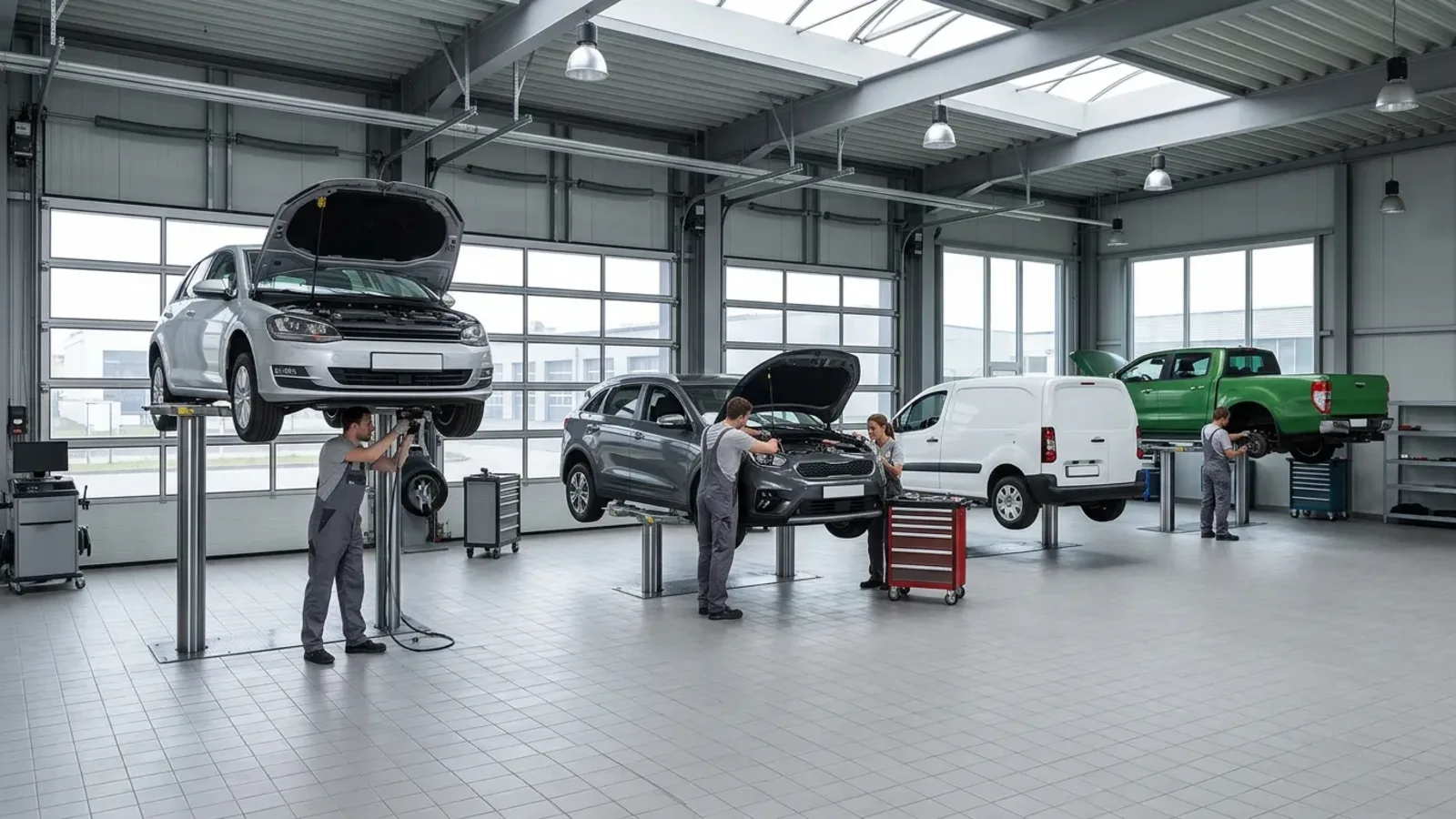
The Dacia Jogger is a spacious, simple family car with room for up to seven people. In Auto Świat's long-term test, the TCe 100 Eco-G version had its engine, gearbox and drivetrain in good condition after several years of use, and the main complaint was corrosion in hard-to-reach places on the body and underbody. Worn seat belts in the second row and an air conditioning refrigerant leak also appeared. We are not a Dacia authorised dealer workshop: we service the Jogger outside the dealer network as a Bosch Car Service (GVO).
- Jogger from 2022
- 1.0 TCe, TCe Eco-G, Hybrid
- 5 or 7 seats
- Corrosion check
Which Dacia Jogger versions are on the market and which years are they from?
| Version | Years | Powertrain |
|---|---|---|
| TCe 110 | from 2022 | 1.0 TCe, petrol, manual |
| TCe 100 Eco-G | from 2022, later a more powerful variant | 1.0 TCe with factory LPG |
| Hybrid 140 | from 2023 | Full hybrid with a 1.6 petrol engine and an automatic transmission |
The Jogger uses the same platform as the Sandero III, so many parts and servicing procedures are shared. On the seven-seat version, it is worth checking the mountings and folding mechanisms of the third row.
In Auto Świat's test, the second-row belts were probably damaged when folding the seats, because the webbing has no guides and gets pinched. At a service it is therefore worth inspecting the belts in the second and third rows, and when folding the seats, move them aside. In the Hybrid version, energy recovery takes over part of the braking, so the discs and pads wear more slowly, but they can pick up surface rust and corrosion, which is why we assess their surface, not just their thickness.
Which Jogger engine, and what to watch out for?
- 1.0 TCe 110: a three-cylinder turbo with a timing chain. In Auto Świat's test, attention was drawn to vibrations typical of three cylinders, not to faults.
- TCe Eco-G: the same engine with a factory LPG installation. After the test ended, the cylinders, pistons, bearing shells and turbo were in good condition.
- Hybrid 140: a system with a 1.6 petrol engine and electric motors; servicing additionally includes diagnostics of the high-voltage system.
- In all versions, oil to the Renault specification and timely changes matter.
What did the long-term test reveal, and what problems do owners report?
| Problem | Symptom | What we do |
|---|---|---|
| Body corrosion | Rust on the bonnet hinges, side members, wing mountings | Assessment on the lift and under the bonnet, protection, bodyshop if needed |
| Underbody corrosion | Rust at welds, on the beam under the LPG tank, on line brackets | Underbody inspection, anti-corrosion protection |
| Second-row belts | Webbing chafing at the folding seats | Assessing the belts, replacing damaged ones |
| Air conditioning refrigerant leak | Weak cooling | Leak test, repairing the condenser line |
| Panel fit | A protruding wing, uneven gap at the bonnet | Assessing the body adjustment |
How to service a Jogger, and does a service outside the dealer network keep the warranty?
Dacia specifies the service plan for each version; we check it by VIN and compare it with the book. The scope is usually oil to the Renault specification and filters, a check of the brakes, suspension and air conditioning, and in the hybrid also a read-out of the hybrid system. In light of the test results, at a service we suggest an inspection of the underbody and the sensitive points of the body for rust.
If a Jogger stands outside in winter or drives on salted roads, it makes sense to wash the underbody after the season and inspect the anti-corrosion protection. Small rust spots are easier to protect early than to repair later.
The Jogger is still a young car, often under warranty. A service that follows Dacia's plan and is documented in the book can be done outside the authorised dealer network; warranty repairs and recall/service campaigns are carried out by a Dacia authorised dealer workshop. Check the terms, including the perforation warranty, in your warranty booklet.
Buying a used Jogger? What to check
- The underbody and body for corrosion, including near the LPG tank in the Eco-G.
- The seat belts and the folding mechanisms of the second and third rows.
- How well the air conditioning works.
- In the hybrid, the system's fault memory and the 12 V battery.
- The service history and recall/service campaigns for the VIN.
Jogger Eco-G with factory LPG: what do we service, and what not?
We do not service LPG installations. On the Jogger Eco-G we service the engine, brakes, suspension, air conditioning, electrics and underbody, including an inspection of the tank mountings for corrosion. The Jogger often carries a full load of people and luggage, so at a service we pay attention to the brakes and tyres.
You can book your Jogger on 58 552 55 25 or via the form. Give the VIN and the powertrain version; we will prepare a quote once the car has been identified, and we will tell you about any additional faults before the repair.
Frequently asked questions
Is the Dacia Jogger a good family car?
For many families yes: it is spacious and simple to maintain. In Auto Świat's long-term test the drivetrain did well, and the main drawback was corrosion in hidden places.
Jogger with LPG or the hybrid?
The Eco-G is simpler, the hybrid more comfortable in town thanks to the automatic transmission. Remember that we do not service LPG installations.
Does the Jogger rust?
In the car stripped down after Auto Świat's test, corrosion was found on the bonnet hinges, side members and at the underbody welds, among other places. It is worth checking at services.
Are you a Dacia authorised dealer workshop?
No. We service the Jogger as a Bosch Car Service outside the dealer network (GVO); we are authorised for Opel and Peugeot.
How much does a Jogger service cost?
It depends on the powertrain version and the scope from Dacia's plan. We give a quote once the car has been identified by VIN.