
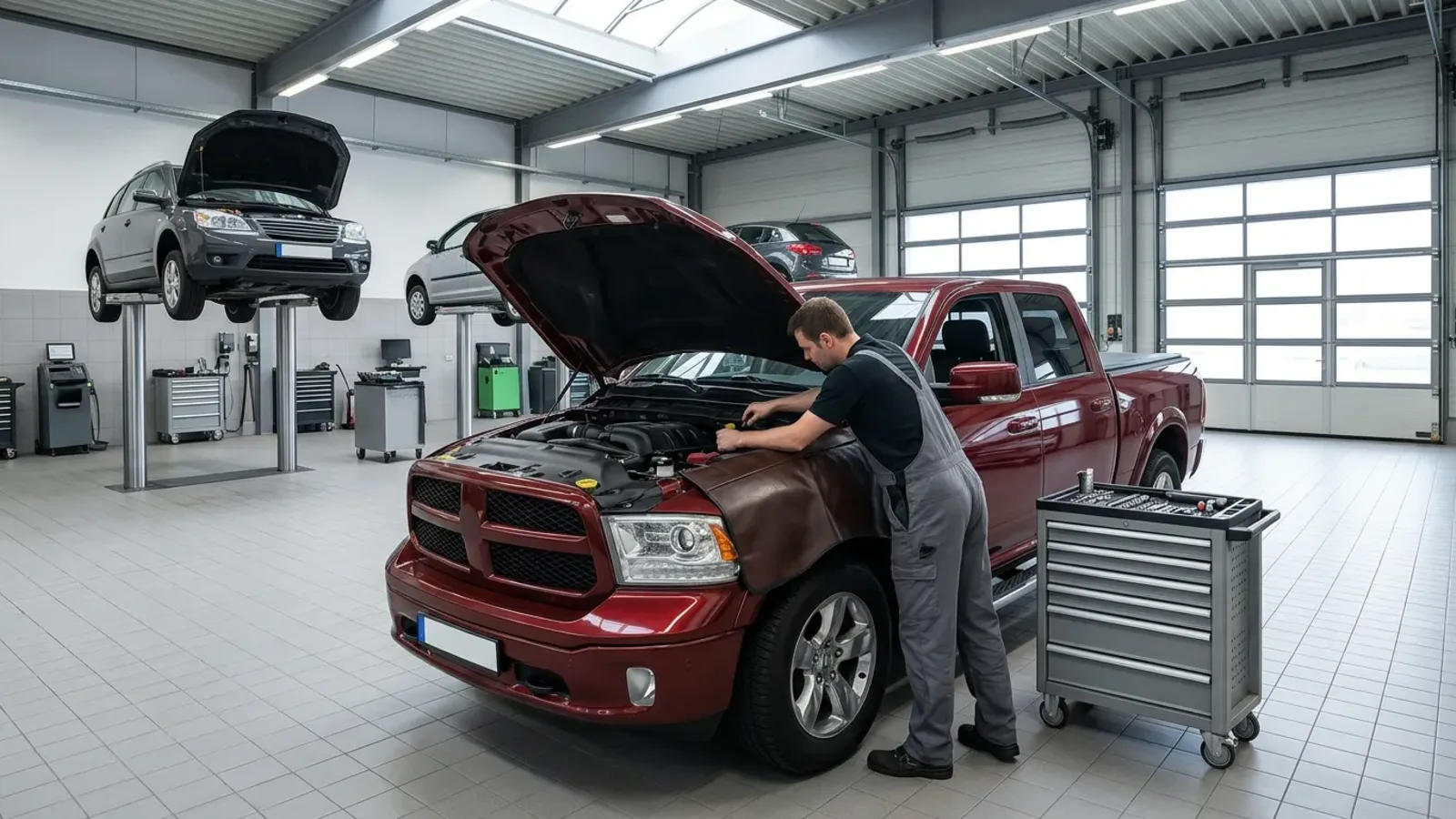
The third-generation Dodge Challenger (2008–2023) is a classic rear-wheel-drive muscle car, offered with the 3.6 Pentastar V6 and the HEMI V8. The design is simple and well known, and what matters most when buying is the recall campaigns (including the passenger airbags, alternator and cruise control), the condition after damage from a US auction, and the wear of the brakes, tyres and drivetrain on the powerful versions. In Poland it is almost always a car from the USA, so we start with the VIN.
- LC generation 2008–2023
- 3.6 V6, 5.7 / 6.4 HEMI, Hellcat
- Rear-wheel drive, AWD too from 2017 (V6)
- NHTSA campaigns checked by VIN
Which Challenger model years are on the market?
| Period | Years | Key features |
|---|---|---|
| Early | 2008–2010 | V6 3.5, 5.7 HEMI, SRT8 6.1; 5-speed automatic |
| Before the facelift | 2011–2014 | New 3.6 Pentastar V6, SRT8 with the 6.4 V8 |
| After the facelift | 2015–2023 | New interior, 8-speed automatic, Hellcat versions; GT with AWD from 2017 |
The Challenger was not officially sold in Poland, so almost all cars are imports from the USA, Canada or the Middle East. Cars after the 2015 facelift have a more modern gearbox and infotainment, which is why they are the most often chosen today.
V6 or HEMI – which engine to choose?
| Engine | Versions | What we look at |
|---|---|---|
| 3.6 V6 Pentastar | SXT, GT | Leaks from the oil filter housing, cooling system |
| 5.7 V8 HEMI | R/T | Lifters and camshaft, MDS system, oil of the viscosity given in the manual |
| 6.4 V8 HEMI | SRT8, 392, Scat Pack | Brakes, cooling, tyres, rear axle |
| 6.2 V8 supercharged | Hellcat, Redeye, Demon | Load on the drivetrain, driveshafts and clutches; servicing per the plan for the high-performance version |
The V6 is the cheapest to keep and copes well with daily driving. The V8 HEMI is mainly about emotion: plenty of torque, but also higher consumption of fuel, tyres and brakes. Some 5.7 owners report lifter ticking when cold. It does not always mean a serious fault, but it is worth diagnosing before purchase.
The most common Challenger problems and recall campaigns
The list is based on NHTSA campaigns for the 2012 and 2015 model years and owner reports. These are not faults of every car, just checkpoints.
| Problem | Symptom | What we do |
|---|---|---|
| Passenger airbag – gas generator (campaigns 16V352, 19V018, including 2012) | No symptoms; risk on deployment | Check the campaign by VIN; the Dodge authorised dealer workshop does the replacement |
| Alternator (campaigns 14V634, 17V435) | Charging warning light, engine stalling | Test the charging system and battery |
| Cruise control does not switch off (campaign 18V332) | The car holds speed | Verify the software update |
| Fuel rail line (campaign 15V114, 2015) | Smell of fuel in the engine bay | Check the tightness of the fuel system |
| Lifter ticking in the 5.7 HEMI (reported by some owners) | Metallic ticking, rough running | Diagnostics, check the camshaft and lifters |
| Brake and tyre wear on powerful versions | Vibration when braking, squealing | Replace discs, pads, fluid; wheel alignment |
The passenger airbag campaign matters for safety. If you are buying a Challenger from 2008–2014, check its status in the NHTSA search tool before you pay.
How to service a Challenger?
The service plan is in miles, and the oil indicator shows a percentage of its life. We check the oil and fluid specification by VIN. On high-performance versions the manufacturer provides a heavier service plan than on the V6.
- oil of the viscosity given in the manual – on the HEMI it affects the operation of the lifters and the MDS system;
- oil in the rear axle, especially after harder driving;
- automatic: tightness and software, manual: clutch and dual-mass flywheel;
- brakes and brake fluid more often than on an ordinary car;
- battery and charging – these cars often stand in a garage over winter.
A Challenger from the USA: what to check before buying?
- VIN: version and engine, open NHTSA campaigns, auction and damage history.
- Body: quality of the repair after damage, panel gaps, signs of repainting.
- Underbody: rust, leaks from the engine, gearbox and axle.
- Engine: cold start, ticking, smoke; control unit reading.
- Drivetrain: play in the driveshafts and propshaft, gearbox operation under load.
We are not a Dodge authorised dealer workshop – we service the Challenger as an all-makes workshop and Bosch Car Service. After import we will do a baseline service and change the software to Polish (language, units), if the version allows it. We do not do tuning or power increases.
Frequently asked questions
Is the Dodge Challenger a good everyday car?
In the V6 version – yes, it is comfortable and simple to service. The V8 works as a weekend car, because it uses more fuel and wears tyres and brakes faster.
Is the Challenger with the 3.6 V6 durable?
The 3.6 Pentastar is an engine used in many Stellantis models and well known to workshops. The most common issue we see is oil leaks from the filter housing, which can be repaired.
What is the HEMI tick?
That is what owners call the metallic ticking in HEMI engines. It can be harmless, but it can also mean wear of the lifters or camshaft, so it is worth diagnosing.
Will you replace an airbag under a recall campaign?
Recall campaigns are carried out by the Dodge authorised dealer workshop. We can check the VIN and tell you which campaigns the car is affected by.