
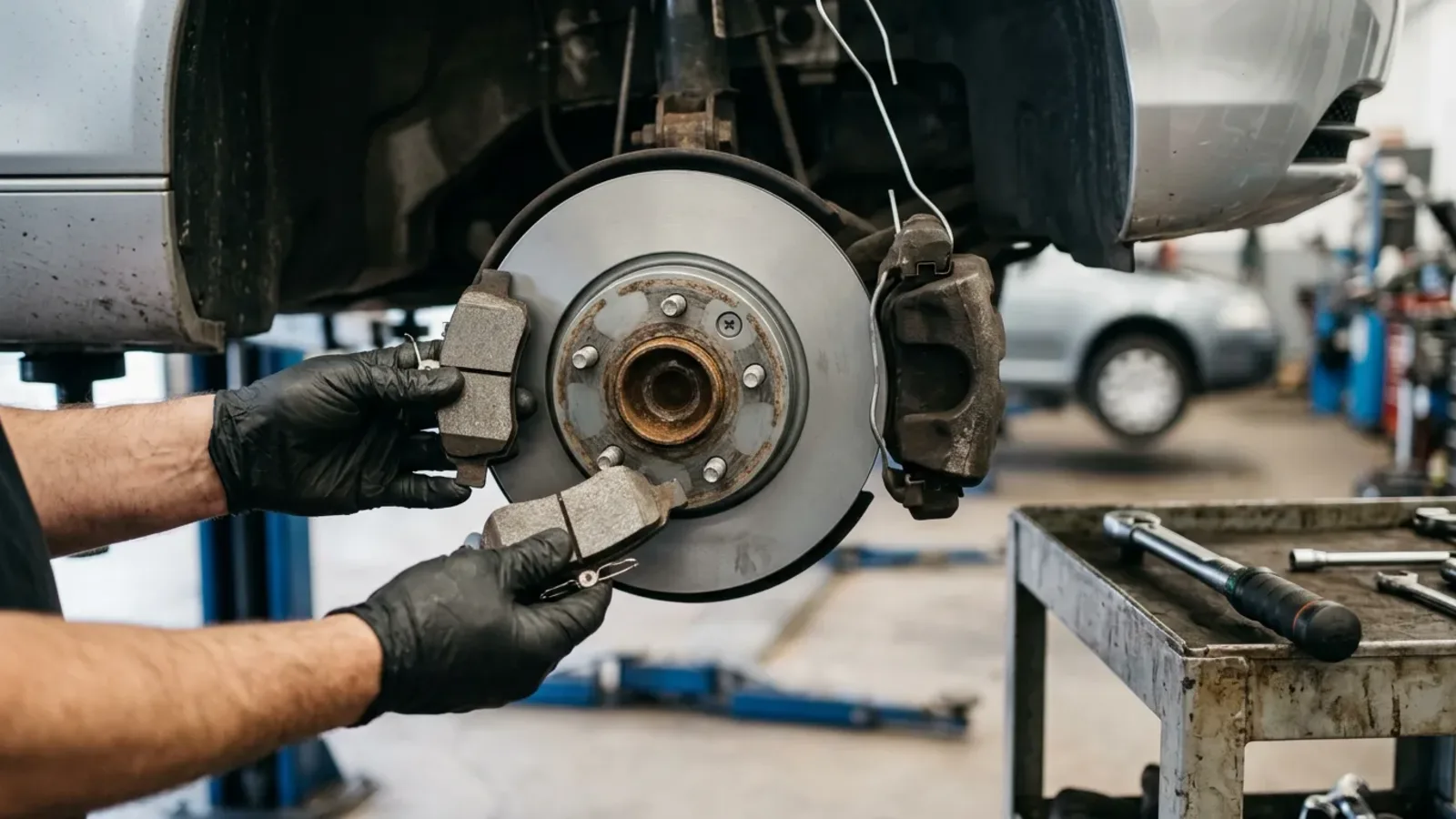
When replacing brake pads at Serwis Osowa we also measure the disc thickness and check the calipers, hoses and brake fluid. We always replace pads in pairs on an axle. We replace discs when they are below the minimum thickness given by the manufacturer, have deep grooves or are warped and cause run-out. We also carry out diagnostics of ABS, ASR and ESP systems.
- Pad and disc measurement
- Replacement in pairs on an axle
- Caliper and fluid check
- ABS/ASR/ESP diagnostics
How to tell that the brake pads need replacing?
- squealing or grinding when braking: in many pads this is the metal wear indicator rubbing on the disc;
- the pad wear warning light on the dashboard, if the car has an electric sensor;
- a longer braking distance or the pedal going down further than usual;
- steering wheel or pedal vibration when braking, a common symptom of warped discs;
- the car pulls to one side when braking, which may mean a sticking caliper;
- a lower fluid level in the reservoir, which falls as the pads wear.
If the brake pedal is soft, sinks to the floor, or the red brake warning light is on, do not continue driving. Contact roadside assistance.
Pads or pads with discs: when to replace the discs?
| Part | When to replace |
|---|---|
| Pads | When the lining approaches the minimum (usually a few millimetres) or the wear indicator triggers |
| Discs | Below the minimum thickness stamped on the disc (MIN marking), with deep grooves, cracks or run-out |
| Brake fluid | According to the manufacturer, in many cars every 2 years, because the fluid absorbs moisture |
| Hoses and calipers | With leaks, corrosion, cracks or a sticking piston |
Discs and pads are always replaced across the whole axle, never on one side. New pads on old, heavily worn discs are usually not worth it, because the pads take longer to bed in and brake less effectively. After replacement, brake more gently for the first few hundred kilometres so the pads and discs bed in well.
What do we do when replacing pads and discs?
- Measuring pad and disc thickness, inspecting hoses and covers.
- Removing the calipers, cleaning the guides and carriers, checking the pistons and rubber boots.
- Fitting new pads and, if needed, discs, tightening the bolts according to the manufacturer's data.
- In cars with an electric parking brake, retracting the pistons in service mode with the diagnostic tester.
- Checking the level and quality of the brake fluid, replacing it if due or if the fluid has too much water.
- A road test and checking that the brakes work.
The service advisor confirms the scope of replacement and the quote after checking the car. The need to replace discs is decided by measurement, not mileage.
Brakes and the ABS and ESP warning lights
An ABS light that is on does not usually mean worn pads, but a fault in the wheel speed sensor, its cable or the ring from which the sensor reads wheel speed. The ordinary brakes then keep working, but under hard braking the wheels may lock, and along with the ABS the ESP is often switched off. When work is done on the hub, it is worth checking the sensor and its cable straight away. We carry out ABS/ASR/ESP diagnostics on site.
Pad replacement near the Tricity Bypass
Serwis Osowa is at ul. Odyseusza 20 in Gdańsk Osowa, a few minutes from the Osowa junction on the Tricity Bypass. When booking, give the car model and describe the symptoms: squealing, vibration, warning light. This lets the service advisor plan the time and parts.
Frequently asked questions
How long does brake pad replacement take?
Replacing pads on one axle usually takes about an hour, longer with discs. The time depends on the model, the condition of the calipers and whether the car has an electric parking brake.
Do the discs have to be replaced with every pad change?
No. Discs are replaced when they are below the minimum thickness, or have deep grooves, cracks or run-out. One set of discs often lasts through two pad changes, but this depends on the car and driving style.
How often should the brake fluid be changed?
According to the manufacturer's recommendations, in many cars every 2 years. The fluid absorbs moisture, which lowers its boiling point, and under heavy braking the pedal can go soft.
Why do new brakes squeal?
Shortly after replacement it can be the bedding-in effect. If the squeal lasts longer, the cause may be dirty guides, missing grease at the contact points or badly chosen pads. In that case come in for a check.