
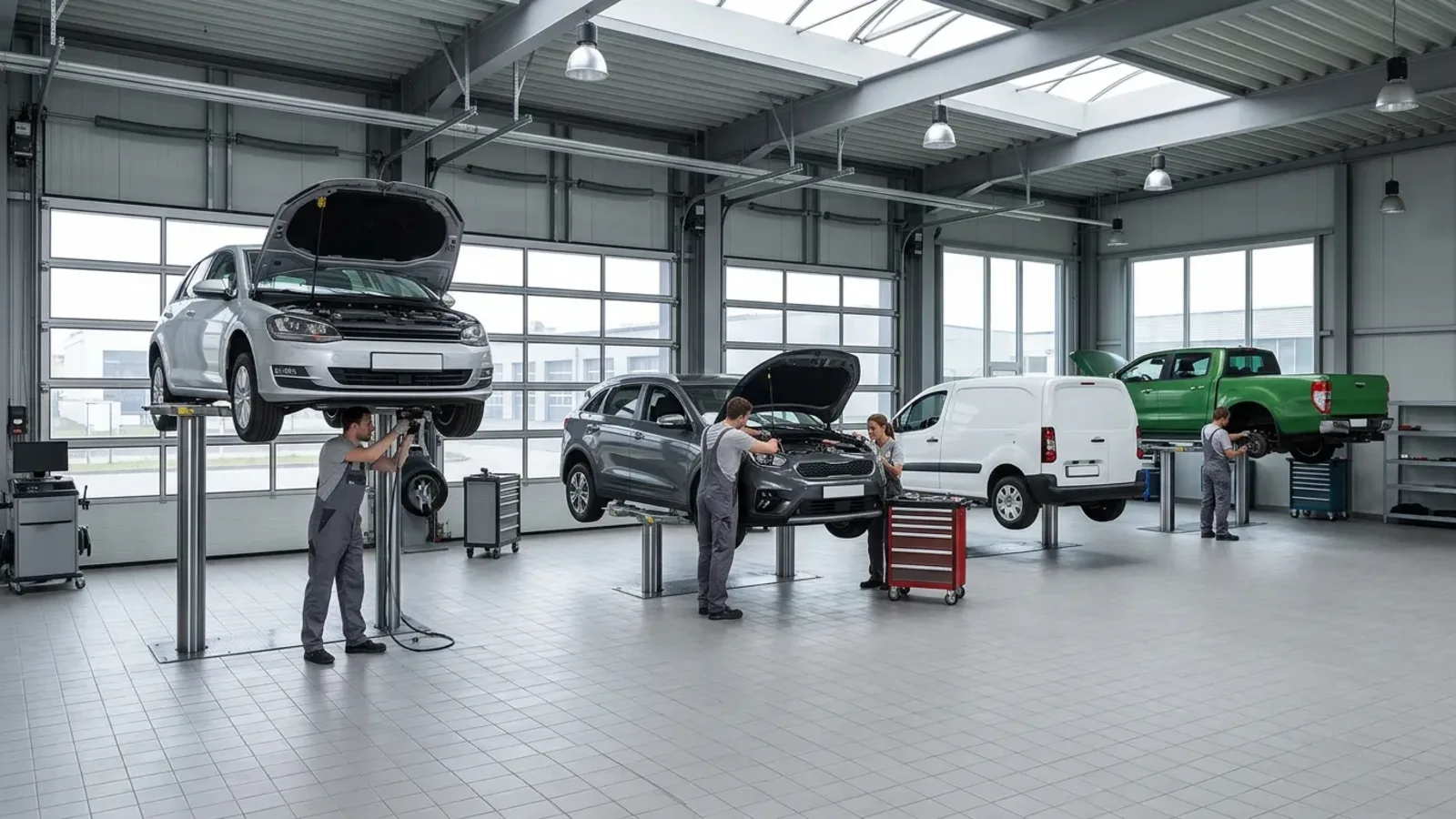
The Volkswagen Tiguan II (2016–2023) is a well-developed family SUV that, in the opinions of editors and mechanics, comes across as sound, without serious design flaws. When buying and servicing, keep an eye on the rear springs, driveshaft joints, brake discs, the water pump in the diesels and oil leaks in the 1.5 TSI. We are not an authorised Volkswagen dealer workshop: we service the Tiguan outside the dealer network as Bosch Car Service, in line with the EU Block Exemption rules (GVO). Check the warranty terms in your warranty booklet.
- Tiguan I, II and III
- 1.4 / 1.5 / 2.0 TSI, 2.0 TDI
- DSG and 4Motion drive
- Service to the plan for your VIN
What are the VW Tiguan generations and from which years?
| Generation | Years | Main powertrains |
|---|---|---|
| Tiguan I (5N) | 2007–2016, facelift 2011 | 1.4 TSI, 2.0 TSI, 2.0 TDI |
| Tiguan II (AD1), also Allspace | 2016–2023, facelift 2020 | 1.4 and 1.5 TSI, 2.0 TSI, 2.0 TDI, plug-in eHybrid from the facelift |
| Tiguan III | from 2024 | 1.5 eTSI with mild hybrid, 2.0 TSI, 2.0 TDI, eHybrid |
Most listings concern the second generation, including the long-wheelbase Allspace with a third row of seats. The third generation is mostly still under warranty, so for it the service dates and documented entries matter most.
Which engine should you choose in the Tiguan II?
- 1.4 TSI (125 and 150 hp): timing belt, and in the more powerful version cylinder deactivation. In the first years of production the basic petrol.
- 1.5 TSI (130 and 150 hp): the successor to the 1.4. Auto Świat mentions oil leaks around the variable valve timing, so we check the tightness of the cylinder head at every service.
- 2.0 TSI (from 180 hp): timing chain, usually with 4Motion and DSG. When buying, we listen to the engine from cold.
- 2.0 TDI (115–240 hp): the most often recommended for long routes. According to Auto Świat, water pump failure happens in the diesels, and from the facelift an SCR system with AdBlue is added.
The most common problems reported in the Tiguan II
| Problem | Symptom | What we do |
|---|---|---|
| Cracked rear spring | Car sags on one side, knock from the rear | Inspection on the lift, replacing springs in pairs |
| Front driveshaft joints | Clicking when turning and pulling away | Checking the boots and play, replacing the joint or driveshaft |
| Brake discs | Judder through the steering wheel, cracks visible on inspection | Measuring discs and pads, replacing on the axle |
| Water pump in the 2.0 TDI | Coolant loss, smell of coolant, rising temperature | Leak test, replacing the pump usually together with the timing |
| Oil leak in the 1.5 TSI | Traces of oil on the cylinder head, smell of burning | Locating the leak, replacing the seals |
| Discover Media infotainment | No sound, screen freezing, phone not connecting | Reading fault codes; software updates are referred to the authorised dealer workshop |
Auto Świat also mentions recall/service campaigns concerning the brake pedal and the factory tow bar. Whether a particular car has had them done is checked by the Volkswagen authorised dealer workshop from the VIN.
How to service a Tiguan outside an authorised dealer workshop without losing the warranty?
Volkswagen uses a fixed or flexible (LongLife) oil change mode, depending on the code in the car and your driving style. Before a service we read the plan for the VIN and compare it with the entries in the book. Apart from oil and filters, the plan includes, among other things, brake fluid, spark plugs on petrol cars, DSG oil and Haldex clutch oil on 4Motion versions.
You can have a service that follows the manufacturer’s plan, uses parts of comparable quality and is recorded carried out outside an authorised dealer workshop. Warranty repairs and recall/service campaigns are carried out by the Volkswagen authorised dealer workshop. Check the scope and length of the warranty in your warranty booklet.
Buying a used Tiguan? What to check
- The service history and whether the recall/service campaigns have been done for the VIN.
- The rear springs, joints and brake discs on the lift.
- How the DSG works cold and warmed up, and entries on gearbox oil changes.
- On 4Motion: engagement of the rear axle and servicing of the Haldex clutch.
- The tightness of the panoramic roof and its drains, if fitted.
Tiguan with DSG and 4Motion: what is added to the servicing?
Most Tiguan IIs have the DSG dual-clutch gearbox. The wet versions (clutches in oil) require an oil change according to the plan, and jerking when pulling away is first checked by reading fault codes and adaptation, before a diagnosis of the mechatronic unit is made. On 4Motion, the Haldex clutch has its own oil and filter, often skipped at services.
Call 58 552 55 25 or send the form with your model year, engine and VIN. You receive a quote once the car has been identified, and we tell you about any additional faults before the repair.
Frequently asked questions
Is the VW Tiguan II a good used choice?
For many families, yes: it is roomy, drives well and parts are easy to find. The condition is a documented history and a check of the suspension, brakes and DSG.
Petrol or diesel in the Tiguan?
For town and short routes the 1.4 or 1.5 TSI is more sensible, for long routes the 2.0 TDI. A diesel driven only in town puts the DPF and the AdBlue system at risk.
Are you an authorised Volkswagen dealer workshop?
No. We are authorised for Opel and Peugeot. We service the Tiguan as Bosch Car Service outside the dealer network, and warranty repairs and recall/service campaigns are carried out by the Volkswagen authorised dealer workshop.
Will you change the oil in the DSG and the Haldex?
Yes, according to the manufacturer’s plan for the specific gearbox and drive, which we check from the VIN.
How much does a Tiguan service cost?
It depends on the engine, the drive and the scope in the manufacturer’s plan. The service advisor prepares a quote once you provide the VIN.