
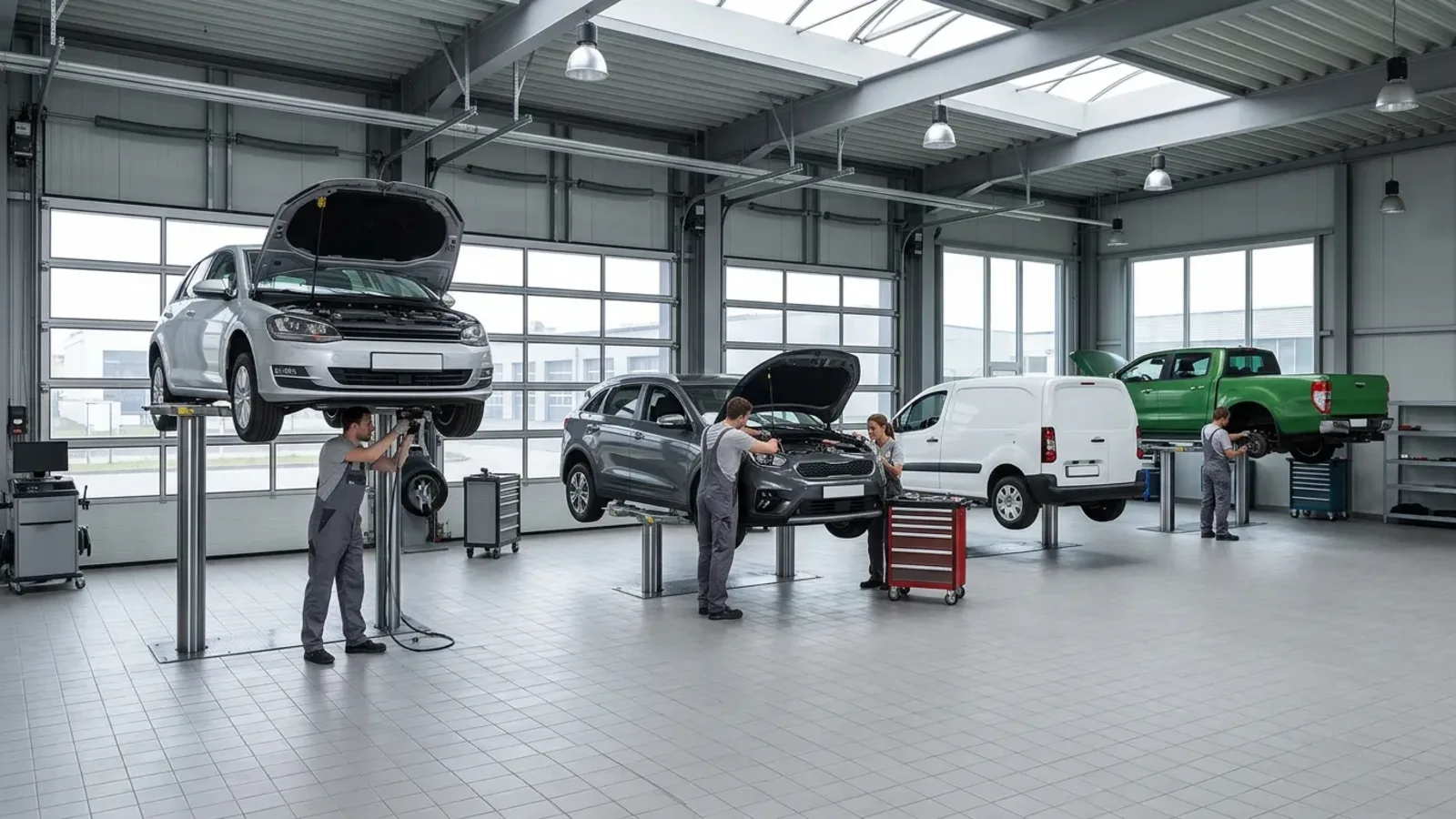
The Opel Crossland X (2017–2024, simply Crossland since the 2020 facelift) is a small SUV built jointly with PSA, technically close to the Peugeot 2008. In ADAC's breakdown statistics it does better than average, and the most common cause of immobilisation was ignition. It does worse at technical inspections in Germany: TÜV more often points to the suspension, corroded brake discs and oil leaks. On the 1.2 Turbo, watch the belt in oil, and we will check service campaigns by VIN at the Opel dealer workshop.
- Ignition and belt in oil on the 1.2 Turbo
- Suspension, discs and leaks according to TÜV
- Service campaigns checked by VIN
- Pre-purchase inspection in Osowa
Which Crossland versions will you find on the used market?
| Period | Name | Key changes |
|---|---|---|
| 06/2017 | Crossland X | Debut, 1.2 and 1.2 Turbo petrols and diesels |
| 10/2017 | Crossland X | Factory 1.2 LPG version (81 hp) |
| 05/2018–06/2019 | Crossland X | New 1.2 Turbo 130 hp variants, Euro 6d standard |
| 09–10/2020 | Crossland | Front and rear facelift, name without the letter X |
| 2024 | Crossland | End of production, succeeded by the Frontera |
According to ADAC, almost all used Crosslands have the three-cylinder 1.2 petrol engine. The naturally aspirated versions (81–83 hp) are suited mainly to the city, and ADAC recommends the 1.2 Turbo with 110 or 130 hp. The diesels are economical, but rare on the used market.
Crossland engine faults – what to watch for?
- Ignition (1.2) – ADAC lists spark plugs and ignition coils (2020 model year) as frequent failures. Symptoms are jerking, uneven running and the engine warning light.
- Timing belt in oil (1.2 and 1.2 Turbo) – PureTech engines require oil to the Stellantis specification and attention to intervals. Neglect speeds up belt degradation.
- Squeals and grinding from the front of the engine (1.2 Turbo 130 hp after the facelift) – reported by several AutoCentrum users. We first check the ancillaries and the multi-rib belt.
- Factory LPG (2017–2018) – users report gas injector errors, although the injectors themselves turn out to be fine. We do not service LPG systems, but we diagnose the engine.
- Diesels – for some cars there was a campaign to check the DPF (2019). For 1.5 Diesel engines built 10/2017–01/2023, a campaign was announced concerning the camshaft chain, which also covers the Crossland.
Most common problems reported by Crossland owners
| Problem | Symptom | What we do |
|---|---|---|
| Spark plugs and ignition coils | Misfires, engine warning light | Computer diagnostics, replacement of plugs and coils |
| Worn suspension components (pointed out by TÜV) | Knocking, play, poorer handling | Check on the lift, replacement of components |
| Corroded brake discs (pointed out by TÜV) | Weaker braking, noise, judder | Replacement of discs and pads, check of calipers |
| Oil leaks (pointed out by TÜV) | Oily engine, oil loss | Locating the leak, checking oil level and consumption |
| ABS/ESC and tyre pressure lights at the same time (1.2 Turbo 110 hp) | Lights come on for no clear reason | Fault read-out, check of ABS and TPMS sensors |
| Timing belt in oil (1.2) | Drop in oil pressure, phasing errors | Belt measurement, oil to specification, campaign check by VIN |
For the Crossland X, ADAC also recorded a 2018 campaign related to a short-circuit risk. We will check by VIN whether a specific example has had all the campaigns.
How to service a Crossland? Maintenance plan
- Service to Opel's plan for the given engine. We read the interval and scope from the VIN.
- 1.2 and 1.2 Turbo: oil to the Stellantis specification, belt check at services, replacement every 100,000 km or 6 years.
- On short trips, change the oil more often and keep a note of top-ups. Excessive oil consumption is a known problem of 1.2 engines.
- Suspension and brakes: the Crossland does worse at TÜV inspections, so it is worth checking them at every service.
The Crossland is a light car, often used on short city trips. This kind of use is bad for both the oil and the brake discs, which rust when the car stands a lot. That is why, at a service, we look not only at mileage but also at how the car is used, and on that basis advise whether to shorten the gap between oil changes.
Used Crossland – what to check before buying?
Ask for the oil change history and whether the belt was measured or replaced. On the lift, check the suspension, brake discs and traces of oil. On a test drive, listen to the engine when cold and check that the ABS, ESC or TPMS lights do not come on. Versions with factory LPG need an additional assessment of the system at a specialist workshop.
Crossland service in Gdańsk – why an authorised Opel dealer workshop?
The Crossland combines the Opel brand with PSA technology, and we are an authorised service centre for both brands. We know the procedures for the 1.2 engines and check campaigns by VIN. We carry out services, diagnostics, and suspension and brake repairs. We give the cost after diagnosis. Serwis Osowa, ul. Odyseusza 20, Gdańsk Osowa.
Frequently asked questions
Does the Opel Crossland break down often?
In ADAC's breakdown statistics the Crossland does better than average. It looks worse at TÜV technical inspections, where it has significant suspension, brake and oil leak defects more often than average. These are items that are easy to check at a service.
Which engine to choose in a Crossland?
ADAC recommends the 1.2 Turbo petrol with 110 or 130 hp. Versions without a turbo are weak outside town. The diesels are economical, but hard to find on the used market.
Is the Crossland a Peugeot 2008?
The Crossland was created in cooperation with PSA and, according to ADAC, is technically closely related to the Peugeot 2008. It has the same 1.2 engines, so the same rules apply for servicing the belt in oil.
What replaced the Crossland?
Production ended in 2024, and the successor is the Opel Frontera.