
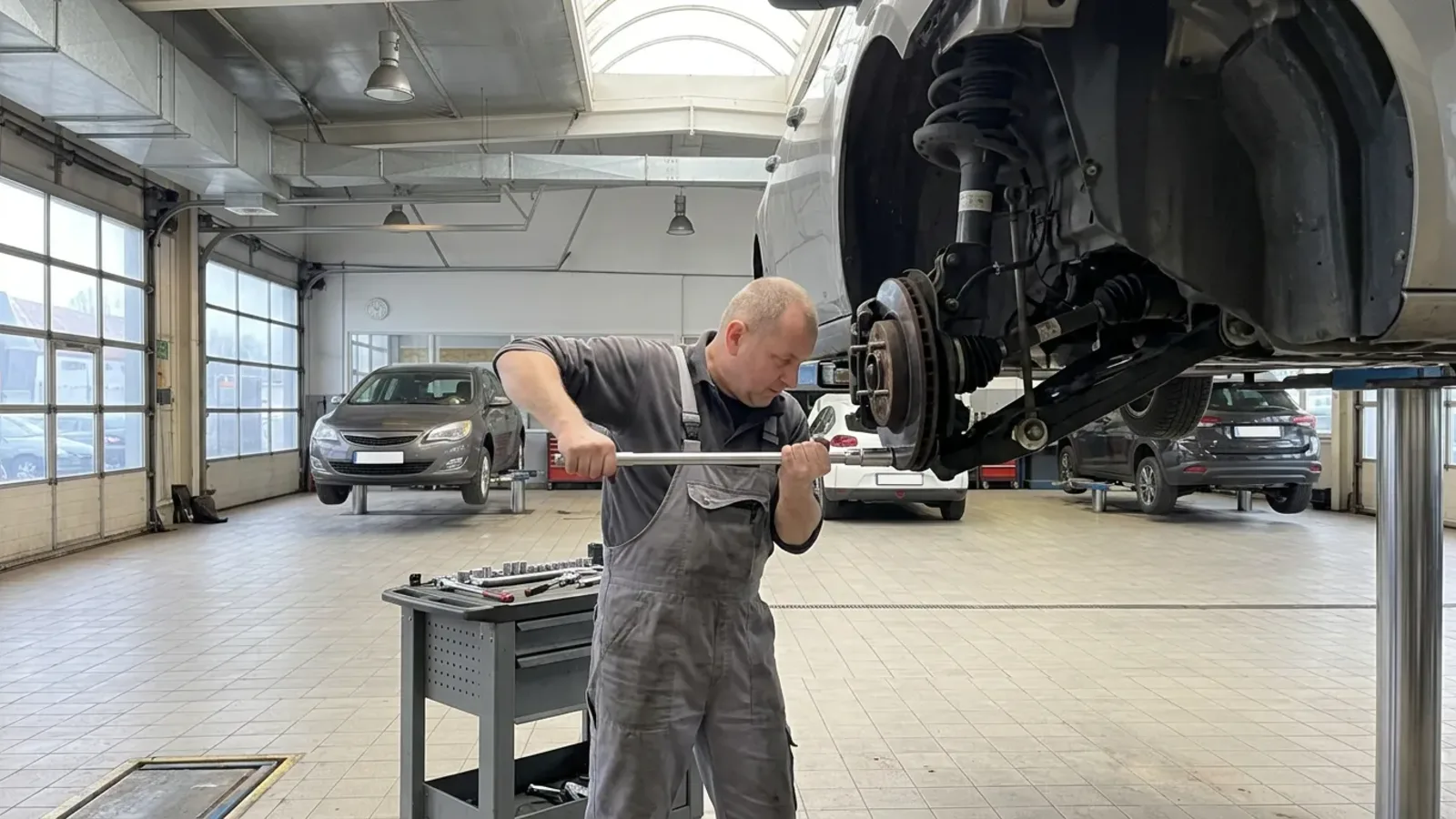
The 1.6 BlueHDi is a diesel from the DV6 family in its Euro 6 version, fitted since 2013 to Peugeots, Citroëns, DSs and some Opels. The engine itself has a reputation for being economical and durable with regular oil changes, and most trouble comes from the ancillaries: the AdBlue system (tank with pump), the DPF with city driving, and the EGR valve. For AdBlue tanks in cars from 2014–2020, Stellantis ran support programmes: as an authorised Peugeot and Opel service centre we check them by VIN.
- DV6 Euro 6, from 2013
- SCR system with AdBlue and DPF
- Timing belt to the manufacturer's plan
- Authorised Peugeot and Opel centre: campaigns by VIN
Which cars have the 1.6 BlueHDi engine?
BlueHDi is the fourth iteration of the popular 1.6 HDi, prepared for the Euro 6 standard. It comes in versions including 75, 100 and 120 hp. Around 2017–2019 the newer 1.5 BlueHDi replaced it in most models, so you will find the 1.6 mainly in cars a few years old and older.
| Make | Example models | Years (approximate) |
|---|---|---|
| Peugeot | 208 I, 2008 I, 308 II, 3008 I and II, 5008, 508 I, Partner | 2013–2019 |
| Citroën | C3 III, C4 Cactus, C4 Picasso II, C-Elysée, Berlingo | 2013–2019 |
| DS | DS 3, DS 4, DS 5 | 2014–2018 |
| Opel | Grandland X 1.6 Diesel | 2017–2018 |
How is the 1.6 BlueHDi built?
It is a four-cylinder diesel with common rail injection, a variable-geometry turbocharger in the more powerful versions and a timing system driven by a toothed belt (the popular 120 hp versions have the engine code DV6FC). The most powerful variants have a dual-mass flywheel. The engine is distinguished by its extensive exhaust aftertreatment: besides the diesel particulate filter it has an SCR system, into which AdBlue is dosed from a tank with a pump.
In practice this means two separate "worlds" to service: the engine itself, which with good care withstands high mileages, and the emissions ancillaries, which do not like short trips and long periods of standing.
Typical 1.6 BlueHDi faults and their symptoms
| Fault | Symptom | Notes |
|---|---|---|
| AdBlue tank or pump | AdBlue system message, countdown of kilometres to a no-start lockout | Stellantis ran support programmes for cars from 2014–2020; terms depend on the country, age and mileage |
| Clogged DPF | DPF light, loss of power, frequent regenerations | Mainly with driving only around town |
| EGR valve and carbon in the intake | Uneven running, loss of power, engine light | Reported by some users at higher mileages |
| Seals under the injectors | Hissing, deposits around the injectors, smell of exhaust fumes | A known problem of the 1.6 HDi family; we check at every service |
| Turbocharger | Whistle, loss of power, smoke | Most often a result of poor lubrication and oil changed too rarely |
| Dual-mass flywheel | Knocking when pulling away and switching off, vibration | On versions with the dual-mass flywheel; usually when the clutch is replaced |
Do not put off an AdBlue message. After the kilometre countdown the engine may not start. Come in for diagnostics before the counter reaches zero.
How to service the 1.6 BlueHDi to avoid faults?
The manufacturer's plan for the 308 II specifies oil to the PSA B71 2290 specification (5W-30). The interval for changing the oil and timing belt depends on the version and year, so we check it by VIN in the manufacturer's system. For city driving we suggest changing the oil more often than the maximum interval in the booklet.
- oil of the correct specification: the wrong oil clogs the DPF faster and harms the turbocharger;
- timing belt with tensioner and rollers according to the service plan; at replacement we assess the water pump;
- AdBlue: fill up with fluid from a reliable source, do not overfill the tank, and do not add water or other liquids;
- now and then a longer run at a steady speed so that the DPF can burn off;
- checking the injectors and intake for leak-tightness at every service.
What do we check on the 1.6 BlueHDi as an authorised Peugeot and Opel centre?
On Peugeots and Opels we are an authorised service centre, so by VIN we check the manufacturer's system for service campaigns, software updates and whether the car qualifies for the programme concerning the AdBlue tank. On Citroëns and DSs with this engine we work as an all-makes workshop and Bosch Car Service, and the manufacturer's campaigns are carried out by a dealer workshop of the given brand.
- Reading the engine controller and SCR system: AdBlue faults, NOx sensors, DPF fill level.
- DPF regeneration history and oil change history.
- Date and proof of timing belt replacement.
- Leak-tightness of the injectors, intake and turbocharger.
- Before purchase: clutch and dual-mass flywheel operation, a test drive watching for messages.
Frequently asked questions
Is the 1.6 BlueHDi a good engine?
The engine itself has a reputation for being economical and durable with regular oil changes. The ancillaries need the most attention: AdBlue, the DPF and EGR. It works best for drivers who often drive long distances.
Does the 1.6 BlueHDi have a timing belt or chain?
A toothed belt. The replacement date depends on the version and year, so we check it by VIN in the manufacturer's service plan.
What should I do when an AdBlue message appears?
First top up the fluid if it is low. If the message does not go away or a kilometre countdown starts, book diagnostics. On a Peugeot or Opel we will also check whether the car is covered by a manufacturer programme.
Is the 1.6 BlueHDi suitable for city driving?
It can be done, but the DPF and AdBlue system cope less well with short trips only. If you only drive around town, plan a longer run now and then and watch for messages.