
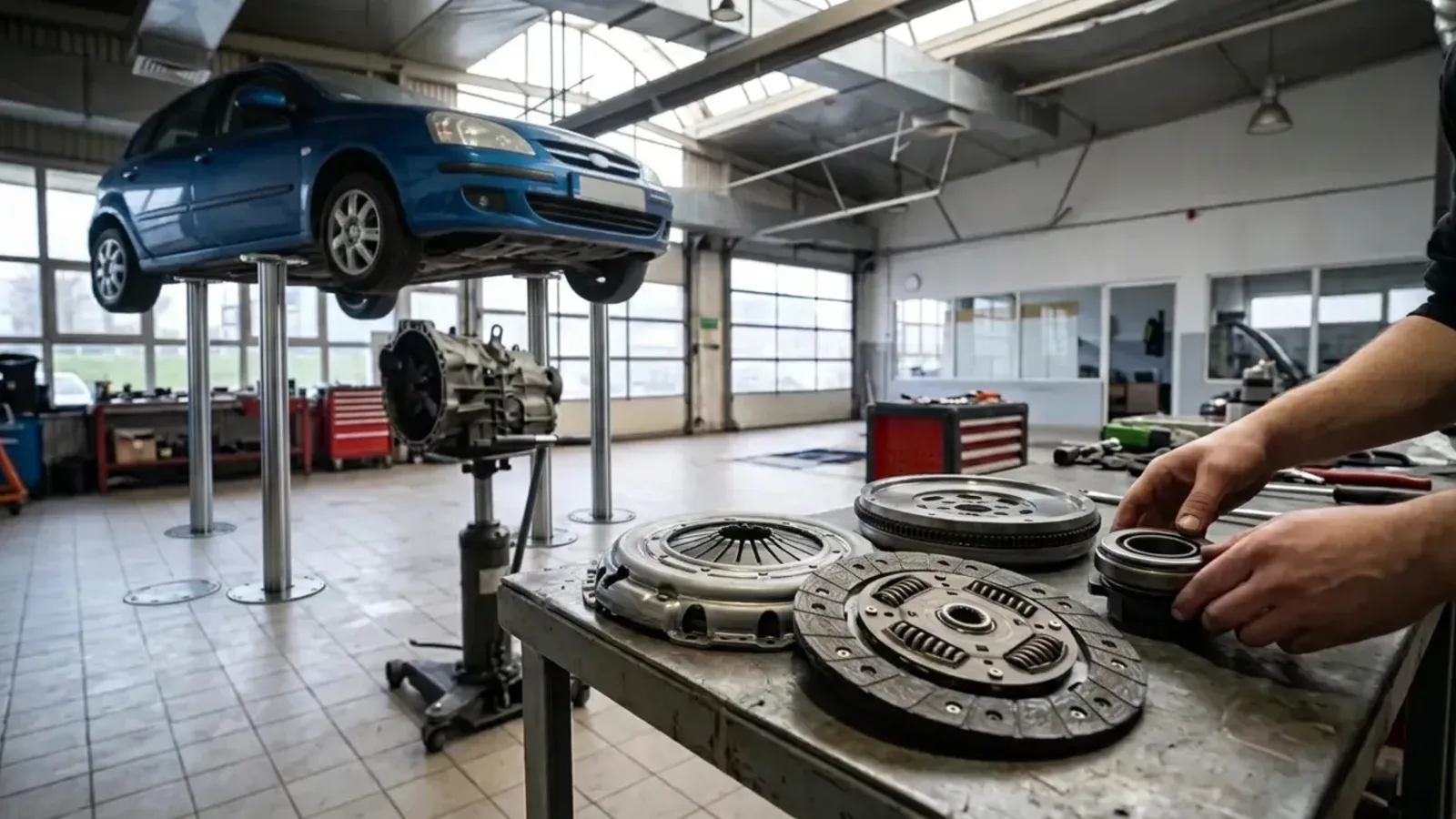
The 1.0 TSI is a three-cylinder engine from the EA211 family (from approx. 2014), today the most popular drive for small and compact VW Group cars. Auto Świat judges that there is no need to be afraid of it: it has no serious design flaws, and the typical troubles concern the coolant pump, clutch and ancillaries. Durability depends on the right oil, checks of the cooling system and sensible treatment of the clutch in town.
- Check of the coolant pump and its belt
- Clutch and gearbox assessment
- Oil to the VW specification for the model year
- Pre-purchase inspection
Which cars have the 1.0 TSI engine?
According to Auto Świat, the 1.0 TSI is used in several dozen VW Group models, in versions from approx. 82 to 116 hp. From 2020 it has been offered as the 1.0 TSI evo, and in the Golf VIII and Octavia IV also as a 48 V mild hybrid (eTSI / e-TEC) with DSG.
| Brand | Example models | Notes |
|---|---|---|
| Volkswagen | up! GTI, Polo, T-Cross, T-Roc, Golf VII and VIII | Golf VIII also eTSI 48 V |
| Škoda | Fabia III and IV, Scala, Kamiq, Karoq, Octavia IV | Octavia IV: 110 hp evo, also e-TEC |
| Seat | Ibiza, Arona, Leon | Output depends on model year |
| Audi | A1, A3 (30 TFSI) | TFSI designation |
How is the 1.0 TSI built and how does the evo version differ?
It has three cylinders, an aluminium head, a turbocharger and direct injection, with a toothed-belt timing drive. The coolant pump sits on the opposite side from the timing drive and has its own small belt driven from the camshaft. Replacing the timing belt does not take long, but according to Auto Świat it requires many special tools.
- The evo version (from 2020) runs on the Miller cycle and has a variable-geometry turbocharger; injection pressure rises to 350 bar.
- Newer 1.0 TSI engines have a petrol particulate filter (GPF), which the older 1.2 TSI did not have.
- Three cylinders run with noticeably different vibrations at idle than four. That in itself is not a fault.
Most common 1.0 TSI faults and their symptoms
The overview is based on Auto Świat and otomoto.pl. Both sources draw attention to the cooling system, and Auto Świat also to the clutch and gearbox.
| Problem | Symptom | What we do |
|---|---|---|
| Coolant pump and its belt | Squealing, coolant loss, temperature fluctuations | Leak test, replacing the pump together with its belt |
| Clutch and gearbox | Jerking when pulling away, noise | Test drive, clutch assessment; sometimes the clutch is enough, sometimes a gearbox repair is needed |
| Ancillary belt | Squealing after rain or driving on sand | Inspection of the belt and rollers, cleaning, possibly an undertray |
| Leaks at the driveshaft seals (older examples) | Traces of oil at the gearbox | Inspection on the lift, seal replacement |
| Increased oil consumption, control electronics | Frequent top-ups, engine warning light | Check of loss between changes, computer diagnostics |
Auto Świat also warns that improper servicing can end in a cracked oil sump. When changing oil and working under the car, correct choice of support points and tightening torques matter.
What oil for the 1.0 TSI and how often the timing belt?
The VW oil specification depends on the model year and version (older examples and the evo with GPF have different approvals), so we select it from the VIN. According to otomoto.pl, for EA211 engines the manufacturer often does not give a fixed belt replacement interval and recommends checking it. On cars a few years old we also plan replacement according to the age of the belt.
| Area | Recommendation |
|---|---|
| Oil and filter | VW specification for the model year; for city driving more often than in the flexible plan |
| Timing belt | Check at services, replacement with the manufacturer's tools |
| Coolant pump and its belt | Check for leaks and noise at every service |
| Ancillary belt | Inspection, especially on cars without an undertray |
| Clutch | Assessment at service and before purchase |
Is it worth buying a used car with a 1.0 TSI?
In small cars such as the Polo, Fabia or Ibiza, in our assessment it is a sensible choice. In a heavier compact or SUV the engine copes, but works under a greater load and fuel consumption rises. According to Auto Świat, an LPG system works in the naturally aspirated 1.0 MPI, not in the TSI; we do not fit LPG anyway.
- Listen around the coolant pump and check the level in the reservoir.
- Do a few hill starts: jerking points to the clutch.
- Read the fault codes and the engine version (evo or older).
- Check the invoices for oil to the VW specification and the timing belt history.
1.0 TSI service in Gdańsk Osowa
We service VW Group cars as a Bosch Car Service, outside the authorised dealer network (warranty and post-warranty service under the EU Block Exemption rules (GVO)); we are authorised for Opel and Peugeot. Check the warranty terms in the booklet. On the 1.0 TSI we carry out services, timing belt work with the coolant pump, clutches and diagnostics. Quotation after diagnosis.
Gdańsk Osowa, ul. Odyseusza 20, tel. 58 552 55 25, Mon–Fri 7:30–17:00, Sat 9:00–14:00.
Frequently asked questions
Does the 1.0 TSI have a chain or a belt?
A toothed belt, like the whole EA211 family. A separate, small belt drives the coolant pump.
Is the 1.0 TSI enough for an Octavia or Golf?
For relaxed driving, yes, especially in the 110 hp version. If you often drive with a full load of passengers and luggage, a more powerful engine such as the 1.5 TSI will work better.
Does the 1.0 TSI use oil?
Auto Świat mentions cases of increased oil consumption. Small top-ups between changes may happen; a clear loss is worth diagnosing.
What is the 1.0 TSI evo and eTSI?
Evo is the version from 2020 with the Miller cycle and a variable-geometry turbo. eTSI (e-TEC in Škoda) is the same engine with a 48 V mild hybrid system and DSG.