The check engine light (MIL) is a signal from the on-board diagnostics (OBD) system that the control unit has detected a fault affecting engine operation or exhaust emissions and stored a fault code. If it stays on and the car drives normally, you can get to a workshop, but do not put diagnostics off. If it flashes, slow down, do not load the engine and, if possible, stop driving, because this is usually misfiring, which can destroy the catalytic converter.
What does the check engine light mean?
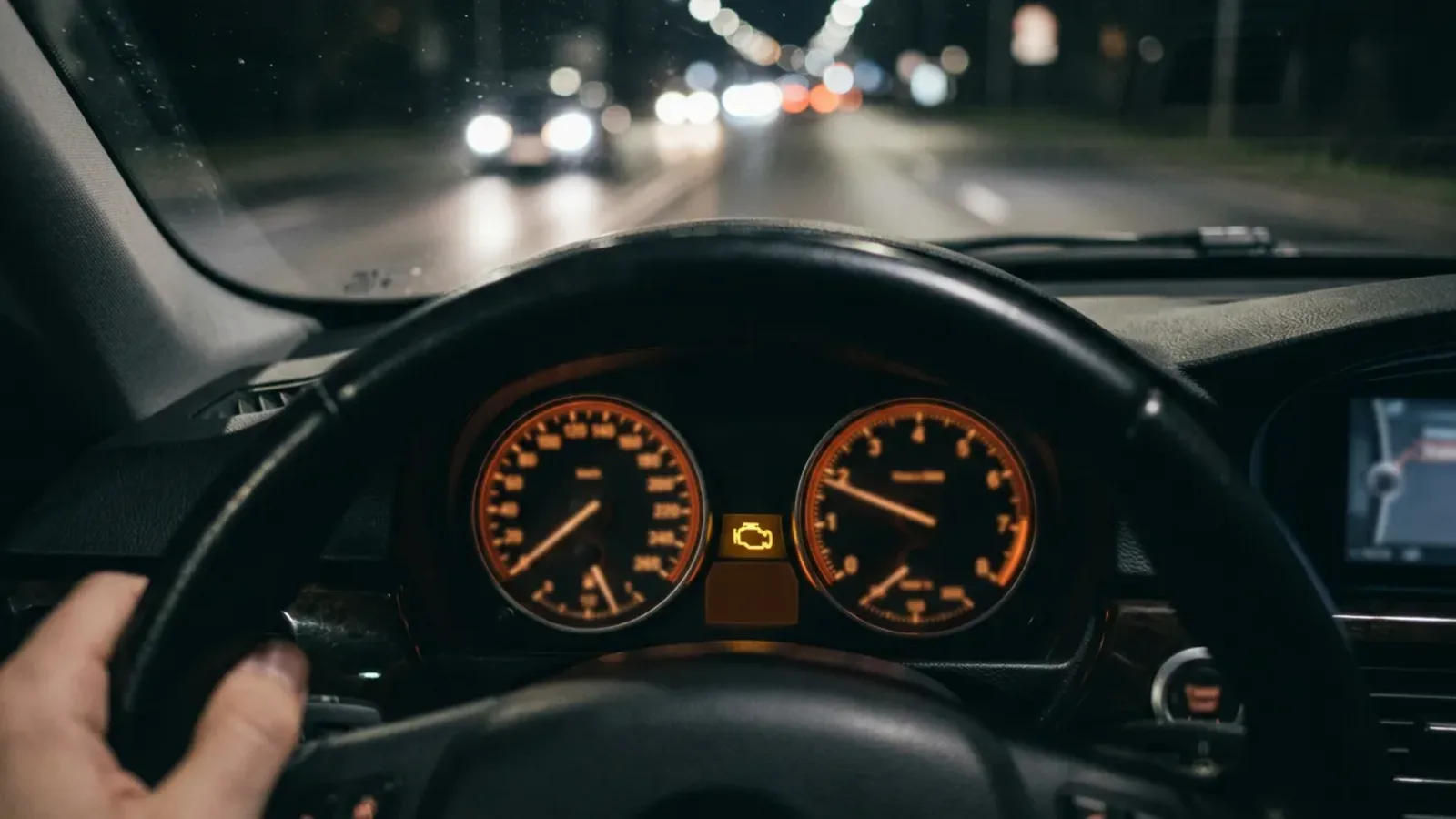
The orange engine icon on the dashboard is known in workshop jargon as the MIL (Malfunction Indicator Lamp). The engine control unit switches it on when the on-board diagnostics (OBD) system detects a problem in the ignition, injection, air intake, exhaust system or the sensors that monitor exhaust emissions. Every time it comes on, a fault code is stored in the control unit's memory.
After you switch the ignition on, the light should come on briefly and go out once the engine starts. This is a bulb or LED test. If it does not come on at all, that is also a fault, because the driver loses the warning. In cars from the US market the same light may be labelled "Check Engine" or "Service Engine Soon" and works to the American OBD-II standard, on which the European EOBD is based.
Important: the light tells you that something is wrong, but not what. The same light comes on for a loose fuel filler cap and for a damaged catalytic converter.
Is the engine light steady or flashing – what is the difference?
A steady light means a fault is stored, but it usually does not threaten immediate engine damage. If the car drives normally, does not lose power and does not judder, you can safely drive home or to a workshop. Book diagnostics within a few days, because a minor fault can lead to further ones over time.
A flashing engine light is a different situation. It most often signals misfiring, meaning a cylinder in which the mixture is not burning. Unburnt fuel reaches the exhaust and burns in the catalytic converter, which overheats very quickly. In its materials for drivers, Ford warns that excessively high exhaust temperatures during misfiring can damage components and create a fire risk.
- Take your foot off the accelerator, do not accelerate hard and do not tow a trailer.
- If the engine clearly judders, loses power or you can smell burning or sulphur, stop in a safe place and switch off the engine.
- Do not continue on a longer journey. It is better to call recovery than to arrive with a ruined catalytic converter.
- Check your car's manual for what the manufacturer recommends for a flashing light.
Orange, yellow or red – how to read warning light colours
Dashboard warning light colours work much like traffic lights. Yellow or orange means a warning: something needs checking, but you can usually carry on driving with care. Red means danger: stop as soon as it is safe. Green and blue lights are informative, for example when the lights are on.
The engine light is almost always orange. If a red oil pressure light (the oil can) or coolant temperature light comes on next to it, do not drive on. Lack of oil pressure or overheating can destroy an engine within minutes. Some cars also show a text message, for example "Engine fault". Always take it seriously and check the description in the manual.
The most common reasons the check engine light comes on
The table below lists typical cases that drivers bring to the workshop. It will not replace a reading from a diagnostic tester, but it will help you judge how urgent a visit is.
| Cause | Typical symptoms | Urgency |
|---|---|---|
| Loose or leaking fuel filler cap (EVAP system) | Light comes on after refuelling, car drives normally | Low – tighten the cap and keep an eye on it |
| Spark plugs or ignition coils | Juddering, rough running, light flashing | High – limit driving |
| Lambda sensor | Higher fuel consumption, uneven idle | Medium – book diagnostics |
| Air flow meter or intake leak | Weaker acceleration, fluctuating revs | Medium |
| EGR valve | Loss of power, smoking, limp mode | Medium to high |
| Diesel particulate filter (DPF, diesel) | Filter warning, limp mode, frequent regeneration | Medium to high |
| Catalytic converter | Loss of power, smell of sulphur, rattling under the car | High |
| Poorly adjusted LPG system | Mixture errors, juddering when switching to gas | Medium |
If the light is flashing or the car has lost power, do not assume it is "just a sensor". Diagnosis first, then the decision about further driving.
What to do straight away when the check engine light comes on
- Check whether the light is steady or flashing, and whether a red oil or temperature warning light is on next to it.
- Note any symptoms: juddering, loss of power, strange noises, smells, smoke from the exhaust. Remember the situation in which the light came on (cold start, acceleration, after refuelling).
- If the light came on right after refuelling, check the fuel filler cap. Remove it and tighten it until you feel a click, and inspect the seal. The light will not go out straight away, usually only after a few driving cycles.
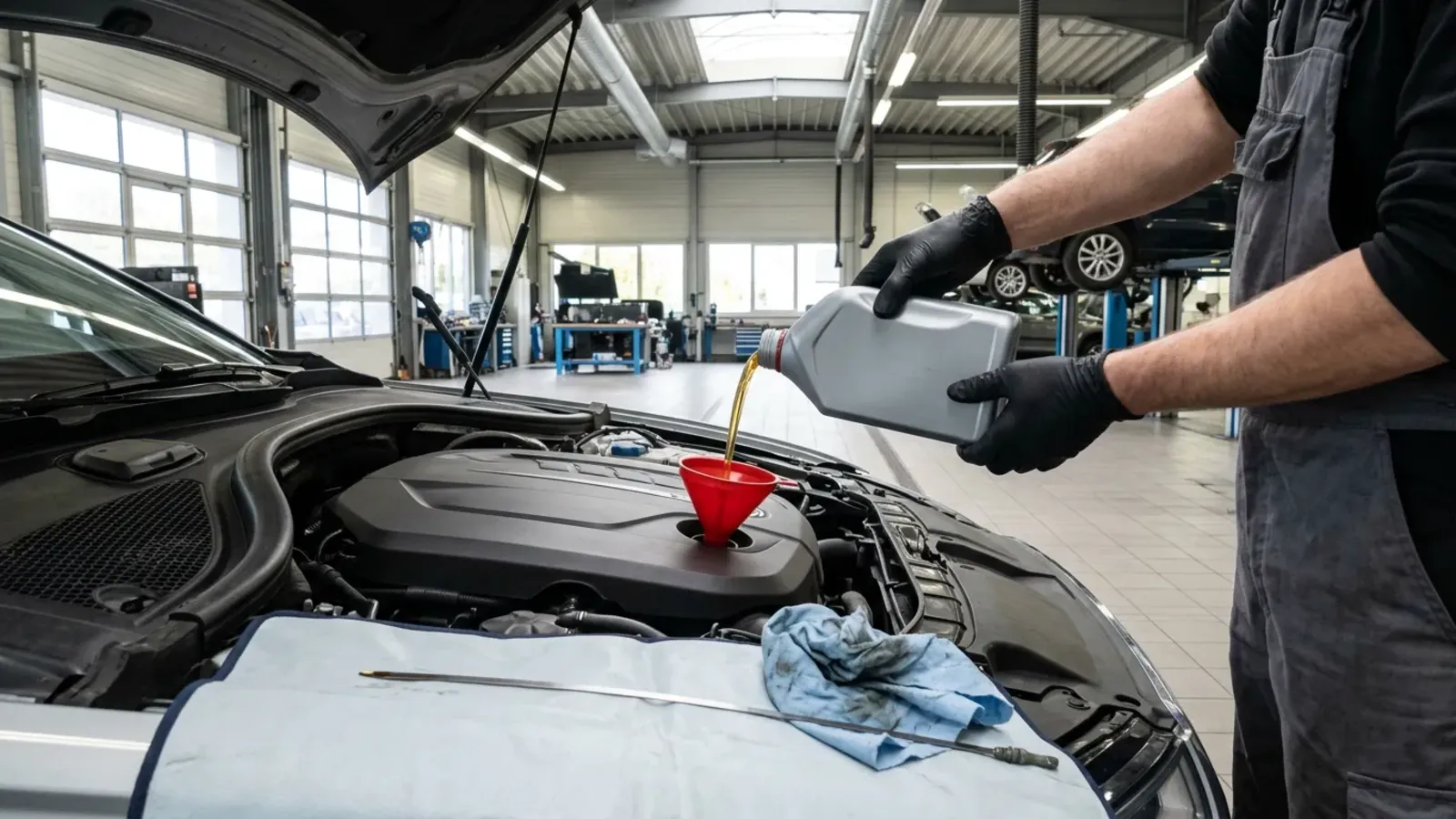
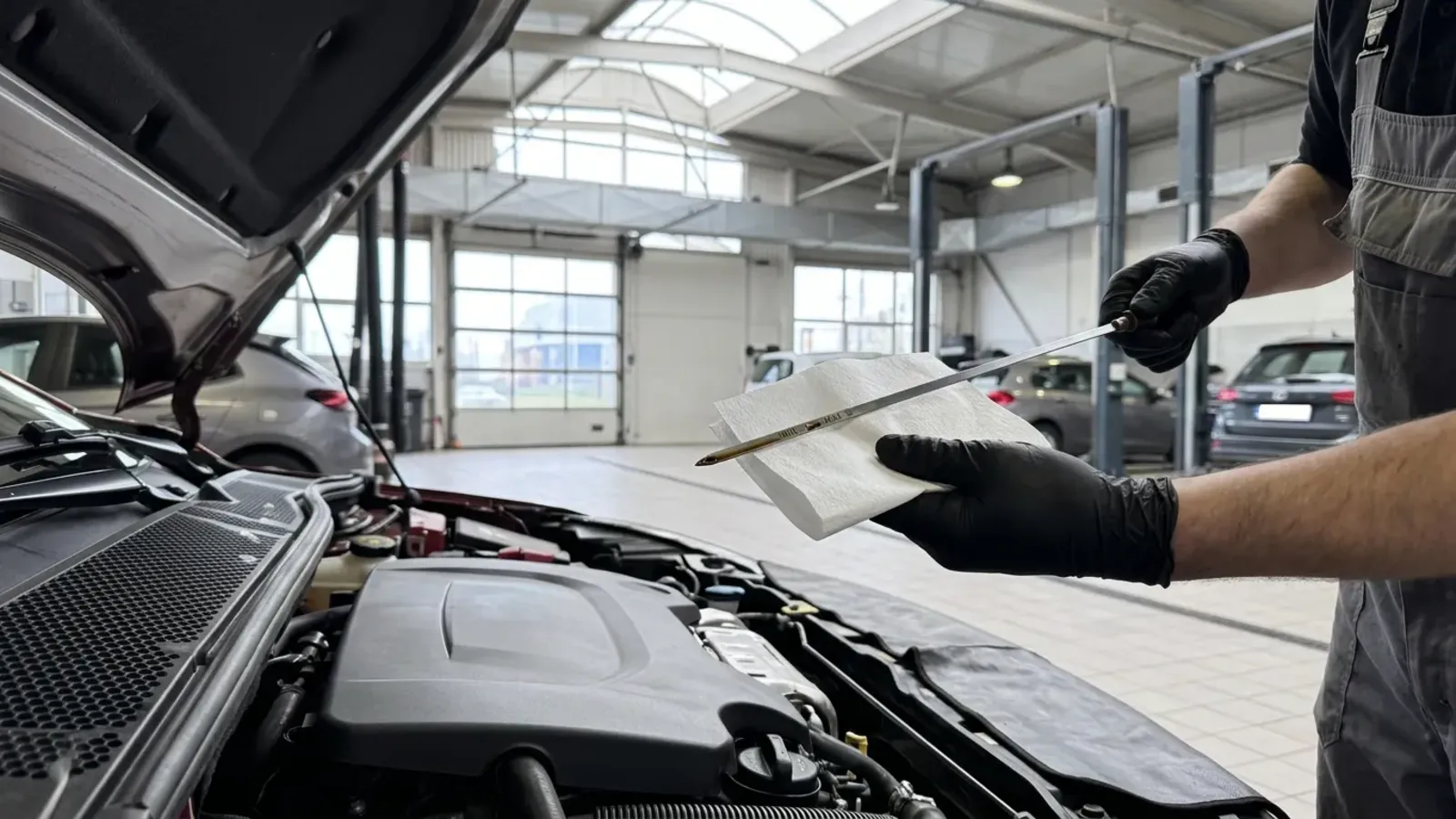
- Check the oil level on the dipstick or in the on-board computer.
- If the car drives normally, get to your destination calmly and book diagnostics. If the light is flashing or the engine is running badly, keep driving to a minimum.
- Do not clear the fault before the service visit. The stored code and the data from the moment it was recorded make it much easier to find the cause.
Why is reading the code with a cheap interface not enough?
An OBD2 interface costing a few dozen zloty and a phone app will read a code, for example P0171 (mixture too lean). The problem is that the code describes a symptom, not the damaged part. P0171 can result from an intake leak, a dirty air flow meter, a weak fuel pump or an injector. Replacing parts "based on the code" often ends with money spent and the light coming back.
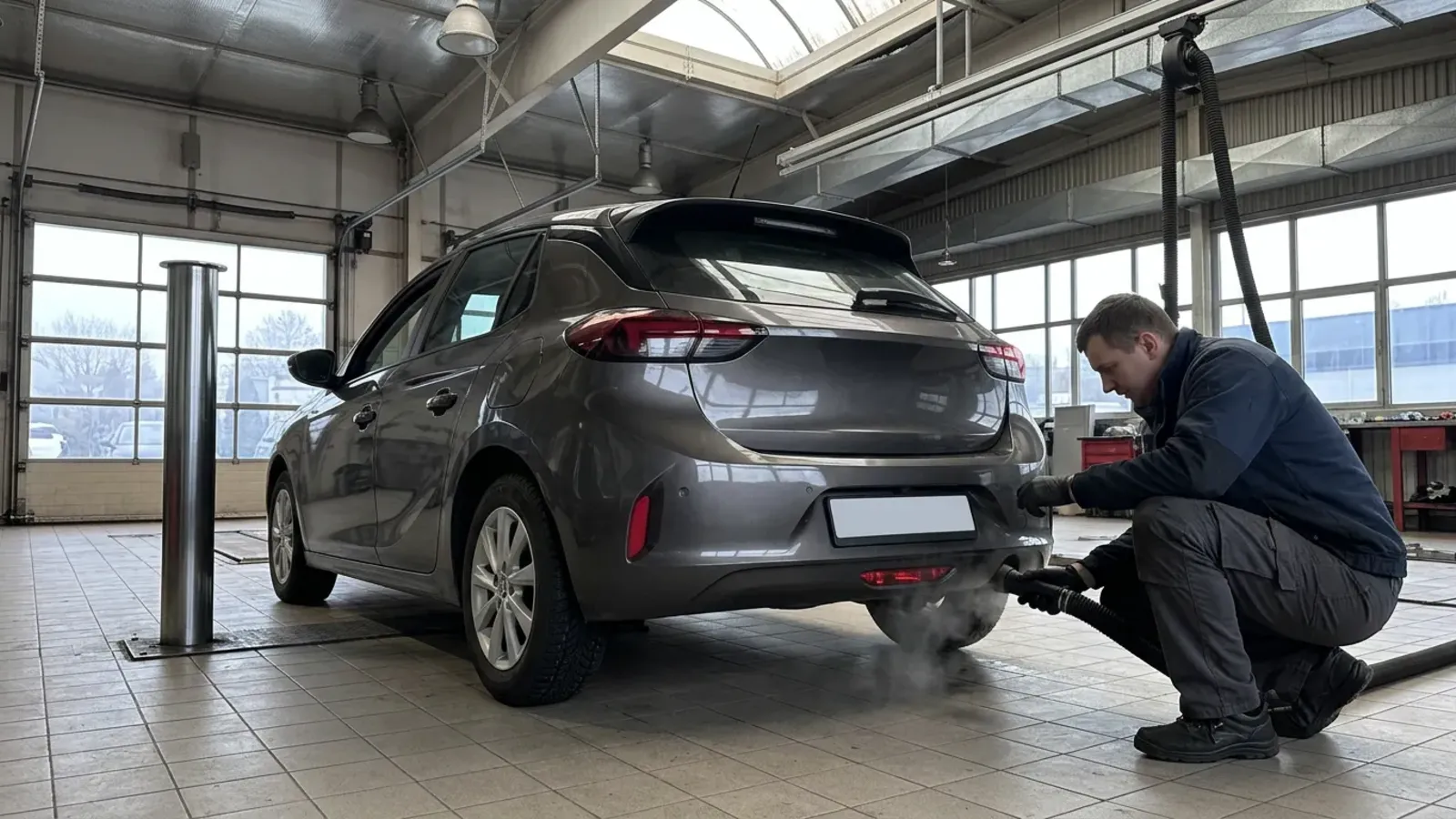
Full diagnostics is more than reading. The mechanic checks the freeze frame (the engine operating conditions at the moment the fault was recorded), live sensor data and fuel trims, runs actuator tests and reads manufacturer-specific codes, which simple apps often cannot see. On top come measurements: fuel pressure, intake tightness, and the condition of the spark plugs and coils.
And what about simply clearing the fault? It only makes sense when the cause is known and fixed, for example after tightening the cap or replacing a faulty coil. Clearing "blind" repairs nothing. If the fault still exists, the light will come back, and in the meantime you could damage something more expensive. Clearing before the technical inspection does not help either, as explained below.
Will you pass the inspection with the engine light on?
Most likely not. The regulation on the scope and manner of carrying out vehicle technical inspections (consolidated text: Dz.U. 2024 poz. 141) requires that, in cars with an OBDII/EOBD system, the inspector checks that the MIL works properly, that all diagnostic routines (so-called monitors) have been run and that no fault codes are stored in memory.
In the annex with the assessment criteria, an OBD reading indicating a serious failure (petrol engines) and emission-related fault codes (Euro 4, 5 and 6 diesels) are classified as major defects. A major defect means a negative result. You then have 14 days to repair the car and return to the same station, which will only check the defects found.
Clearing the fault just before the inspection usually does not work. After clearing, the OBD monitors are not ready until the car has completed the relevant drive cycles, and the inspector can see this in the tester. Remember other warning lights too: under the same regulation, an ABS light indicating a system fault is also a major defect. The final assessment is always made by the inspector at the vehicle inspection station.
If the check engine light is on, come and see us at ul. Odyseusza 20 in Gdańsk Osowa. We are an authorised service centre for Opel and Peugeot and a Bosch Car Service, but we repair all makes, including US cars. Call 58 552 55 25 (Mon–Fri 7:30–17:00, Sat 9:00–14:00). The scope and price of diagnostics are confirmed by the service advisor.
Frequently asked questions
Can you drive with the check engine light on?
If the light is steady and the engine runs normally, you can drive, but have diagnostics done as soon as possible. If it flashes or the car loses power and judders, keep driving to a minimum, as there is a risk of damage to the catalytic converter.
When should the engine light go out?
When you switch the ignition on, the light comes on briefly and should go out once the engine starts. After the fault is fixed it may go out by itself after a few driving cycles, and after a workshop repair it is usually cleared with a tester.
How do you permanently switch off the check engine light?
The only sensible way is to remove the cause. Switching off the light in software hides faults, and at the technical inspection the inspector checks that the MIL works properly. A light that does not work is a problem at the inspection.
Can the engine light come on because of a weak battery?
Yes, this happens in newer cars. Low voltage during starting can trigger errors in several control units at once. If the light came on after a freezing night, which is not unusual in Pomerania in winter, and the car was hard to start, it is worth checking the battery as well.
Can the engine light come on after refuelling with LPG?
Yes. A poorly adjusted gas system changes the composition of the mixture, and the petrol control unit records this as a fault. In that case the LPG system needs to be checked and adjusted, not just the code cleared.