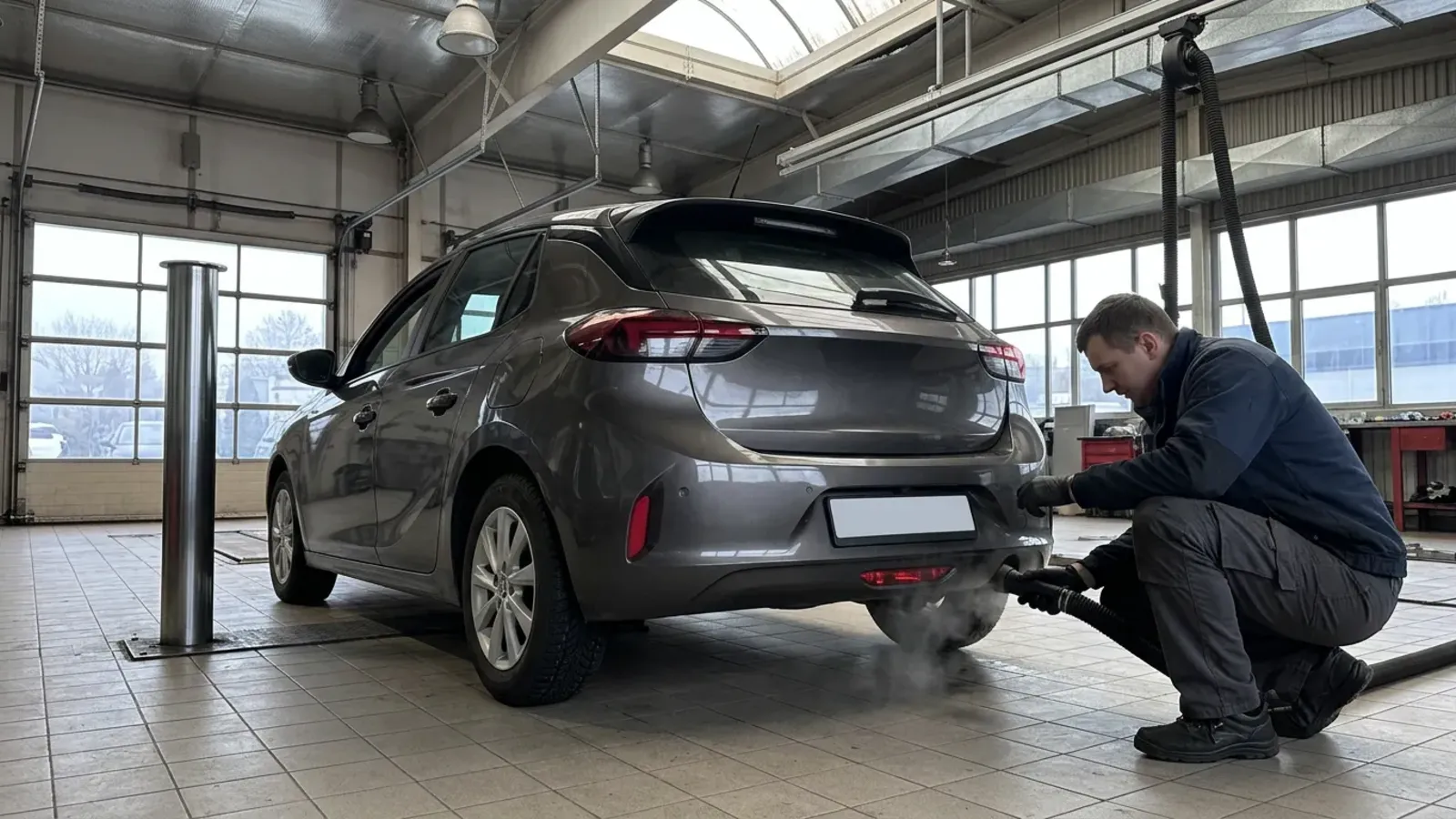
Blue or bluish smoke from the exhaust almost always means the engine is burning oil: through worn valve stem seals, piston rings, the turbocharger or a faulty crankcase breather. Thick white smoke that does not clear once the engine is warm points to coolant in the combustion chamber, for example through the head gasket. Black smoke means a rich mixture, that is, too much fuel in relation to air. Thin white vapour on a cold start that disappears after a few minutes is usually normal.
What does the colour of exhaust smoke mean?
A healthy, warm engine should not produce smoke visible to the naked eye. The colour of the smoke hints at what is burning in the cylinders besides fuel and air, or what is missing for complete combustion. It is a good starting clue but not a diagnosis: the same shade can have several causes, and in sunlight, at night or in frost colours are easy to confuse.
| Colour and behaviour | Most common causes | Urgency |
|---|---|---|
| Thin white vapour on a cold start, clears once warm | Water condensation in the exhaust, especially in winter and in damp weather | None: normal |
| Thick white smoke, does not clear once warm, coolant level dropping | Coolant in the combustion chamber: head gasket, cracked cylinder head, leaking EGR cooler | High: limit driving, urgent diagnosis |
| White-grey smoke from a diesel on a cold start, smell of fuel | Unburnt fuel: glow plugs and injectors, among others | Medium |
| Blue or bluish | Burning oil: valve stem seals, piston rings, turbocharger, crankcase breather, oil level too high | Medium to high: keep checking the oil level |
| Black, especially when accelerating | Rich mixture: injectors, air flow meter, clogged air filter, intake leak, EGR, low boost pressure | Medium |
| Grey | Hard to judge: burning oil, faulty breather, in automatics also gearbox fluid drawn into the engine | Medium: diagnostics needed |
Stop immediately if smoke is coming from under the bonnet rather than the tailpipe, if the coolant temperature rises above normal or if the red oil pressure warning light comes on. In these situations, driving on risks serious engine damage.
White smoke from the exhaust: water vapour or coolant?
Burning fuel produces water. When the exhaust is cold, the vapour condenses in the silencers and comes out of the tailpipe as a white mist, often with dripping water. In winter, in high humidity and on short journeys it is visible for longer, sometimes for a whole drive around town. According to Auto Express, this vapour should disappear once the engine reaches operating temperature.
What should worry you is smoke that is thick, gets thicker under load and persists on a warm engine. If coolant is also disappearing with no visible leak and the exhaust has a distinctive smell, often described as sweet, the coolant is most likely getting into the combustion chamber.
- Check the coolant level in the expansion tank with the engine cold. Do not open the cap on a hot engine, because the system is under pressure.
- Watch the temperature gauge. Overheating together with white smoke is a signal to stop driving.
- Look at the oil: a light, creamy deposit under the filler cap can result from oil mixing with coolant, but on short winter journeys it also appears from ordinary condensation.
- In the workshop the cause is confirmed with, among other things, a cooling system pressure test and a test for combustion gases in the coolant.
Blue smoke from the exhaust: where does the oil come from?
A bluish tint comes from burning engine oil. MS Motorservice (Kolbenschmidt, Pierburg), in its guide to oil consumption, describes several ways oil can reach the combustion chamber or the exhaust. The most important from a driver's point of view:
- Valve stem seals and valve guides: with worn or hardened seals, oil runs down the valve stems into the intake or exhaust and burns there.
- Piston rings and cylinder bores: wear increases blow-by gases and lets oil into the combustion chamber.
- Crankcase breather (crankcase ventilation): when blocked or faulty it raises crankcase pressure and forces oil into the intake system.
- Oil level too high: the crankshaft dips into the oil, creating oil mist that the breather draws into the intake.
- Turbocharger: oil can get past the rotor seals. MAHLE points out that the turbo's surroundings are often to blame: a blocked or kinked oil return line, excessive crankcase pressure or a clogged air filter.
When the smoke appears can be a clue. A short blue puff right after starting the engine in the morning is often associated with valve stem seals, while smoke under hard acceleration is more often linked to piston rings or the turbo. But this is only a lead that has to be confirmed by measurement.
According to MAHLE, smoke and oil loss are among the most common reasons for an unnecessary turbocharger replacement. A new turbo fitted without removing the cause, such as a blocked oil return, can quickly suffer the same damage. Oil left in the intercooler from the old turbo can also cause smoke after the replacement, even though the new part is fine.
Black smoke from the exhaust: too much fuel or too little air?
Black smoke is soot from incomplete combustion. The engine is getting too much fuel for the amount of air. The New South Wales Environment Protection Authority (NSW EPA), in its material on smoky vehicles, lists mainly an excessively rich mixture for petrol engines, and for diesels a blocked air filter, damaged or badly adjusted injectors, low compression and excessive exhaust back-pressure, among other causes.
- Injectors: leaking or poorly atomising injectors cause black smoke, rough running and higher fuel consumption.
- Air flow meter and sensors: a false air flow reading leads to a wrongly calculated fuel quantity.
- Intake and boost: a clogged air filter, a split hose or leaking intercooler and low boost pressure all mean too little air.
- EGR valve stuck open: exhaust gas takes the place of fresh air.
- Tampering with the engine control unit software: increased fuel quantities without matching the rest of the system.
In a modern diesel with a working diesel particulate filter, clearly visible black smoke from the tailpipe is rare, because the DPF traps most of the soot. If a car with a filter is smoking heavily, the problem may be both excess soot from the engine and the condition of the filter itself. Excess soot also shortens the intervals between DPF regenerations.
Smoke from a diesel and a petrol engine: how do they differ?
| Diesel | Petrol | |
|---|---|---|
| Black smoke | More common: injectors, boost, EGR, air filter | Less common, usually a rich mixture or an injection fault |
| White or white-grey on a cold start | Can be unburnt fuel, for example with a glow plug fault | Usually condensation, clears once warm |
| Blue | Burning oil, often the turbocharger or breather | Burning oil, more often valve stem seals or piston rings |
| Filter in the exhaust | DPF: traps soot, excess smoke clogs it | In newer cars a GPF/OPF; oil in the exhaust also harms the catalytic converter |
Grey smoke is the hardest to judge. Auto Express links it to burning oil, a faulty crankcase ventilation (PCV) valve and, in cars with an automatic gearbox, transmission fluid being drawn into the engine. Without reading live data and an inspection, it is hard to say anything for certain.
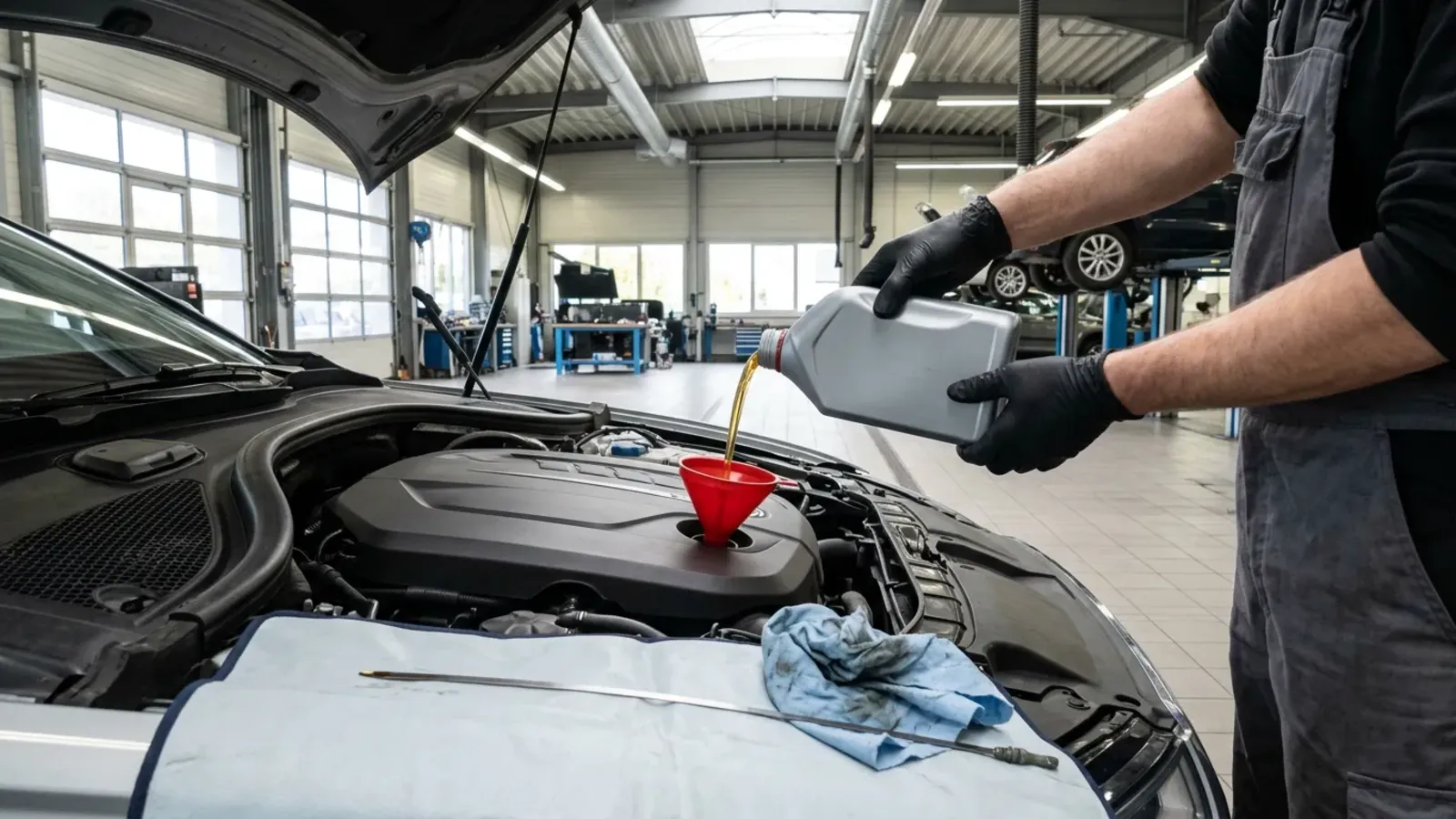
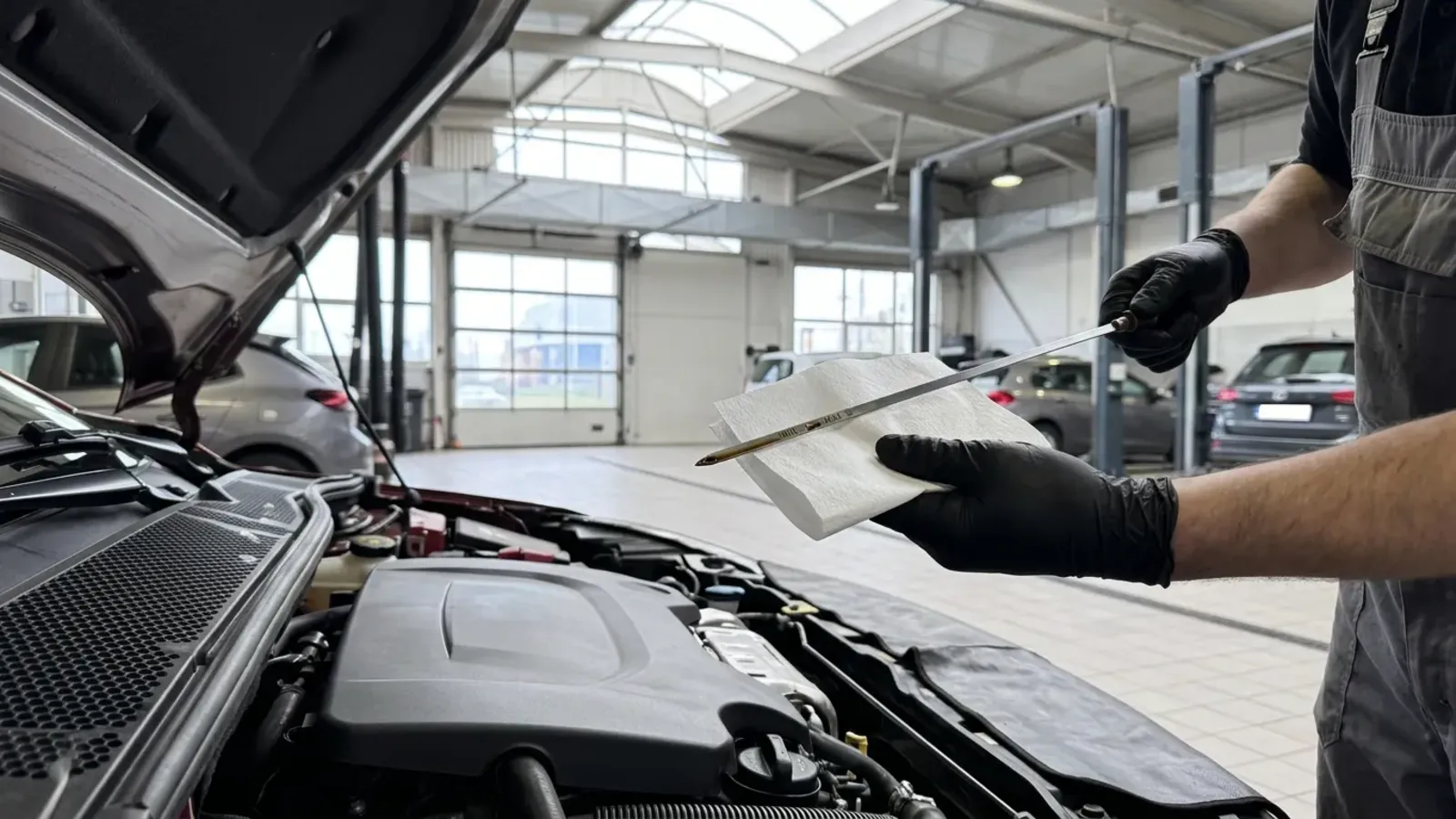
Brief smoking after an oil change where too much oil was added, or after a repair where oil got into the intake, may stop by itself. Still, check the level on the dipstick straight away, because excess oil also ends up being burnt via the breather.
Smoke, the technical inspection and workshop diagnostics
For diesels, exhaust smoke is measured with an optical smoke meter at the periodic technical inspection (MOT equivalent). The regulation on the scope and method of vehicle technical inspections (consolidated text: Journal of Laws 2024, item 141, Annex 1, point 8.2.2.2) treats as a defect a smoke level above the value on the vehicle's data plate or, where there is none, above the value in the regulation on technical conditions. For Euro 4–6 cars the inspector also reads emission-related fault codes from the OBD system. For petrol engines the inspection includes an exhaust gas analysis.
A heavily smoking car therefore runs a real risk of failing the inspection, and removing the DPF or disabling the EGR to "get rid of the problem" is contrary to the regulations. It is better to find the cause. The typical order in the workshop:
- Questions: when the smoke appears (start-up, acceleration, engine braking), how fast oil or coolant is disappearing.
- Computer diagnostics: fault codes and live data, including injector corrections, air flow, boost, EGR operation and DPF status.
- Checking the level and condition of the oil and coolant, inspecting the intake and intercooler for oil.
- Mechanical measurements depending on the symptoms: turbocharger play and sealing, crankcase pressure, compression or cylinder leakage test, cooling system pressure test.
You can have exhaust smoke diagnosed and the engine repaired at Serwis Osowa, ul. Odyseusza 20 in Gdańsk. We are an authorised Opel and Peugeot service centre and a Bosch Car Service, and we repair all makes, including cars from the USA. Call: 58 552 55 25 (Mon–Fri 7:30–17:00, Sat 9:00–14:00). Quote after diagnosis; the scope of work is confirmed by a service advisor.
Frequently asked questions
Is white smoke from the exhaust in winter a fault?
Usually not. In frost and high humidity, water vapour from combustion condenses in the cold exhaust and is clearly visible, sometimes for much of a short journey. What should concern you is thick smoke on a warm engine and a falling coolant level.
Can I drive with blue smoke coming from the exhaust?
For a short time, yes, provided you check and top up the oil regularly. Driving with too little oil risks seizing the engine or turbocharger, and burnt oil harms the catalytic converter and the DPF. The faster the oil disappears, the more urgent the diagnosis.
Why does a diesel puff black smoke when accelerating?
When you press the accelerator, the control unit increases the fuel quantity, and the engine then needs more air. If air is short because of a clogged filter, a leaking intake, low boost or an open EGR valve, or the injectors deliver too much fuel, part of the charge burns incompletely and soot forms.
Will an oil or fuel additive stop the smoke?
Do not count on it. Additives will not replace worn valve stem seals, piston rings or a turbocharger, and they will not unblock an oil return line. They may change the symptoms for a while, but the cause remains and the smoke comes back.
Will a smoking car pass the technical inspection?
It depends on the measurement. In a diesel, smoke is measured with a smoke meter and compared with the value on the data plate or in the regulations, and in newer cars the inspector also reads emission faults from the OBD. Heavy smoke usually means the limit is exceeded and the car fails.
Sources
- MS Motorservice (Kolbenschmidt, Pierburg) – Oil consumption and oil loss (valve stem seals, crankcase ventilation, oil level too high, turbocharger)
- MAHLE Workshop Heroes – Why does a turbocharger lose oil? (return line, crankcase pressure, air filter, smoke after turbo replacement)
- NSW EPA – Causes of smoky vehicles (causes of blue and black smoke in petrol and diesel engines)
- Auto Express – Car exhaust smoke: what do the different kinds and colours of smoke mean? (water vapour, white, blue, grey and black smoke)
- Journal of Laws 2024, item 141 – consolidated text of the regulation on the scope and method of vehicle technical inspections (Annex 1, point 8.2.2.2 – exhaust smoke; Part IV – smoke meter measurement)