The most common symptoms of a failing turbo are a clear loss of power, loud whistling or whining when accelerating, blue or grey smoke from the exhaust, oil loss and oil in the intake pipes, often together with the engine warning light and limp mode. The same symptoms can, however, be caused by an intake leak, the EGR valve, the crankcase breather or the injectors, so the turbo must be confirmed by diagnostics before it is replaced. Garrett states that more than 90% of turbocharger failures are oil-related, so unless the cause is removed, a new turbo can quickly go the same way as the old one.
How does a turbocharger work and why is it sensitive?
A turbocharger (turbo for short) uses the energy of the exhaust gas. The exhaust drives the turbine wheel, which turns the compressor wheel via a shared shaft, and the compressor forces more air into the engine. This lets a small engine produce a lot of power. The shaft spins very fast (MS Motorservice cites speeds of up to 330,000 rpm) and on one side it works in hot exhaust gas.
The shaft bearings are lubricated and cooled by engine oil. A turbo does not have conventional rubber seals like a crankshaft; according to MS Motorservice it uses labyrinth seals, and oil is kept inside the housing partly by the pressure difference on both sides of the wheels. That is why a turbocharger copes very badly with a lack of oil, contaminated oil and anything that upsets this pressure balance.
What are the symptoms of a failing turbo?
A turbo rarely fails overnight without any warning. Symptoms usually build up: first small changes in sound or higher oil consumption, then loss of power and smoke. Garrett and MAHLE list a similar set of symptoms:
- Loss of power and weak acceleration, especially in the mid-rev range where boost is usually felt.
- Noticeably louder running: whistling, whining or a siren-like noise when accelerating, and with more serious damage metallic rubbing or rattling.
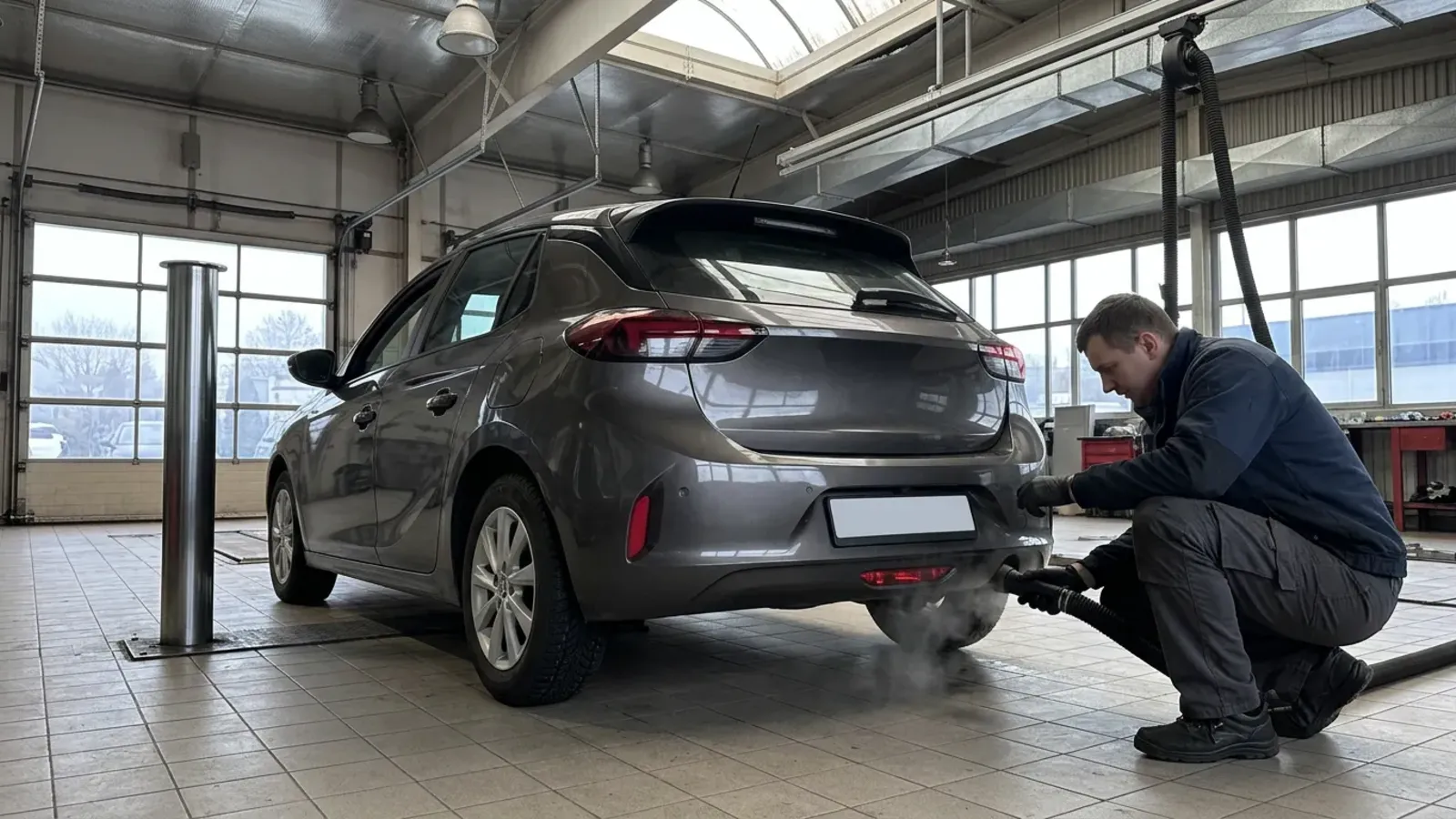
- Blue or grey smoke from the exhaust: burnt oil getting past the bearings into the exhaust or intake. In cars with a DPF the smoke may be hard to see.
- Engine oil going down with no visible leak under the car.
- Oil in the intake pipes and in the intercooler (charge-air cooler).
- Engine warning light, an underboost or overboost code and a switch to limp mode with reduced power.
| Symptom | Turbocharger | Other common causes |
|---|---|---|
| Whistling when accelerating | Shaft play, wheel contacting the housing, damaged blades | Leaking hose or intercooler, old seals on joints, leaking exhaust manifold |
| Loss of power, limp mode | Stuck variable vanes (VGT) or wastegate, worn wheel | Intake leak, EGR valve, air flow meter, boost pressure sensor, blocked DPF |
| Blue smoke, oil loss | Oil getting past the bearings | Oil level too high, faulty crankcase breather, worn piston rings or valve stem seals |
| Black smoke | Too little boost, damaged compressor wheel | Injectors, EGR valve, blocked air filter |
MAHLE points out that even a healthy turbocharger makes some noise, and whistling after a turbo replacement usually comes from its surroundings: leaks and restrictions. The worrying noises are mainly rubbing and rattling, which may mean the wheel is contacting the housing.
Why do turbos fail? The most common causes
Garrett writes that manufacturing defects account for fewer than 1% of failures, and most have three causes: lack of lubrication, contaminated oil and foreign objects. More than 90% of failures are oil-related.
- Lack of lubrication: a blocked or leaking oil feed pipe, oil pressure too low, a new turbo not primed with oil before first start-up.
- Contaminated oil: according to Garrett, most often carbon particles that act as an abrasive. Delphi adds oil diluted with fuel or coolant, a worn or blocked oil filter and oil changes done too rarely.
- A blocked or kinked oil return pipe, oil level too high and excessive crankcase pressure (worn engine, faulty crankcase breather): MS Motorservice names these as typical reasons for oil leaking into the intake and exhaust.
- Foreign objects: a piece of gasket, a nut, a fragment of the manifold or dirt from the intake that damages the wheel blades.
- Driving habits listed by Garrett: long periods of idling, hard acceleration on a cold engine and switching off straight after hard driving.
How to check whether it is the turbo and not the intake or EGR?
Garrett stresses that a damaged turbo is often the result of another problem, and that loss of power, noise, smoke or oil consumption can stem from a fault in the fuel injection, a blocked air filter, the exhaust system or the lubrication. A thorough diagnosis therefore covers the whole system rather than stopping at "the turbo needs replacing".
- Reading codes and live data: target and actual boost pressure, control of the turbo valve or actuator, air flow.
- A test drive with data logging: does boost drop under load, is there overboost.
- An intake leak test: hoses, clamps, intercooler, vacuum lines, joints.
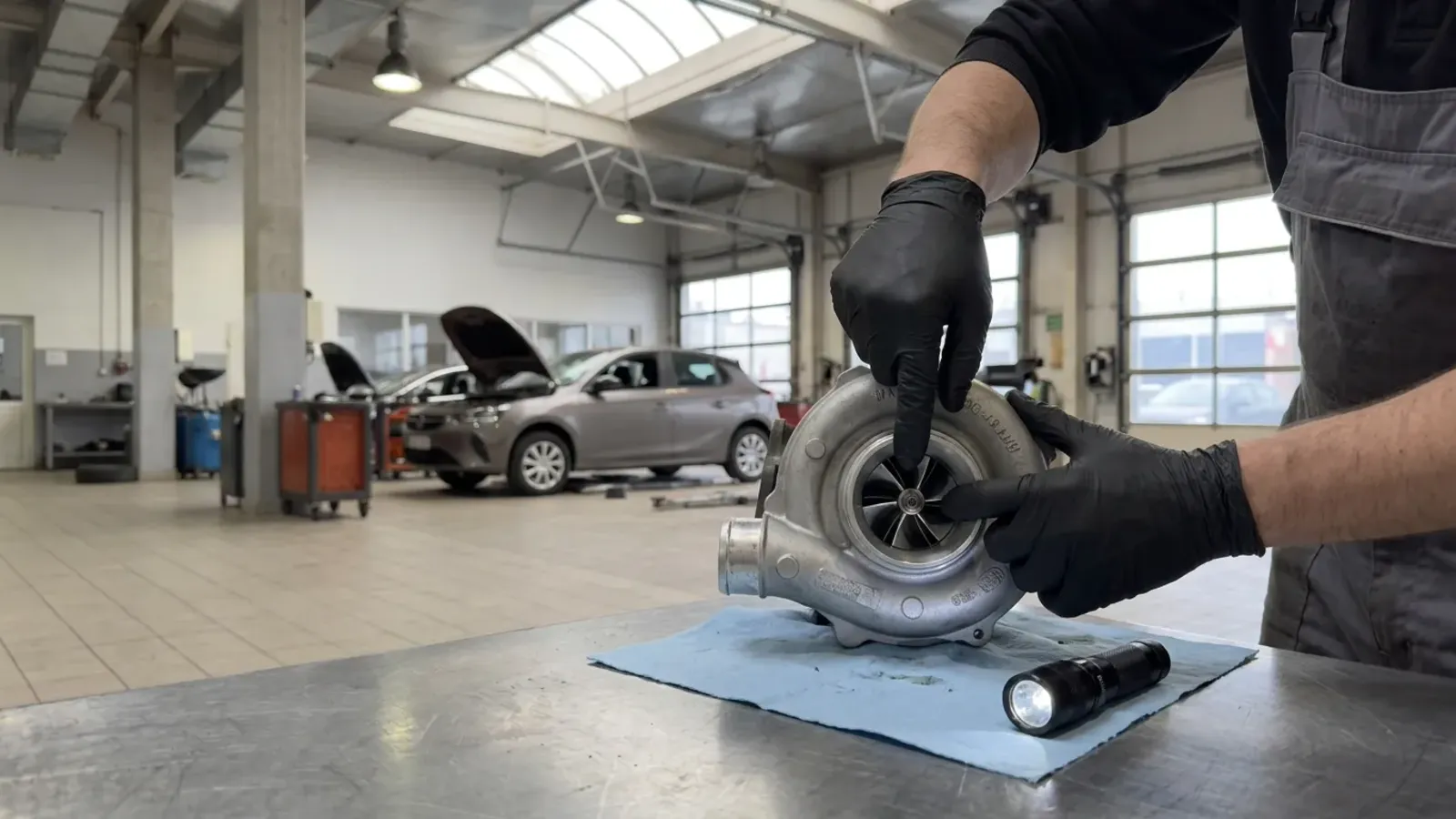
- Inspecting the turbo with the intake hose removed: axial and radial shaft play, signs of the compressor wheel rubbing, damaged blades, oil in the intake.
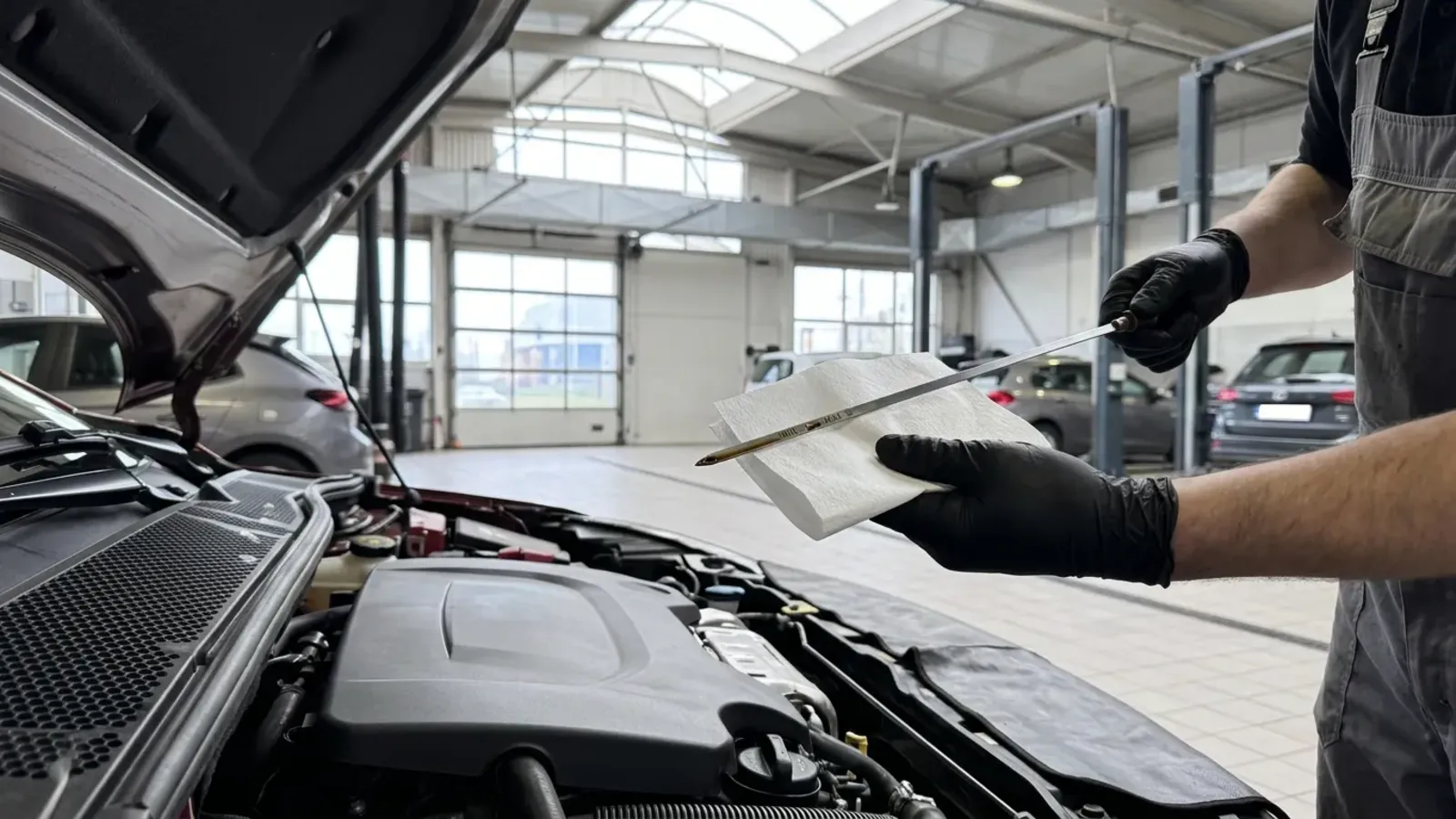
- Checking the oil level and condition, the return pipe, the crankcase breather and the air filter.
- Checking systems that cause similar symptoms: EGR valve, air flow meter, DPF, injectors.
Generic OBD codes related to boost include P0299 (underboost) and P0234 (overboost). They indicate a pressure problem, not a ready-made part to replace: P0299 is very often caused by a leaking hose or a stuck actuator rather than worn bearings.
Can you drive with a damaged turbo?
Briefly, gently and only to the workshop, provided there is no blue smoke, no metallic noise and no oil loss. If the turbo is smoking, whining or using oil, carrying on driving risks more serious consequences than the turbo replacement itself.
- Fragments of a damaged wheel can end up in the engine or in the exhaust system and DPF.
- Oil getting into the intake contaminates the intercooler and can be drawn into the cylinders. In a diesel this can cause the engine speed to rise uncontrollably, because the engine burns the oil like fuel: in that situation the engine must be switched off immediately.
- Oil loss lowers the lubrication level of the whole engine, not just the turbo.
Turbo repair and diagnostics in Gdańsk Osowa: what needs doing besides replacement?
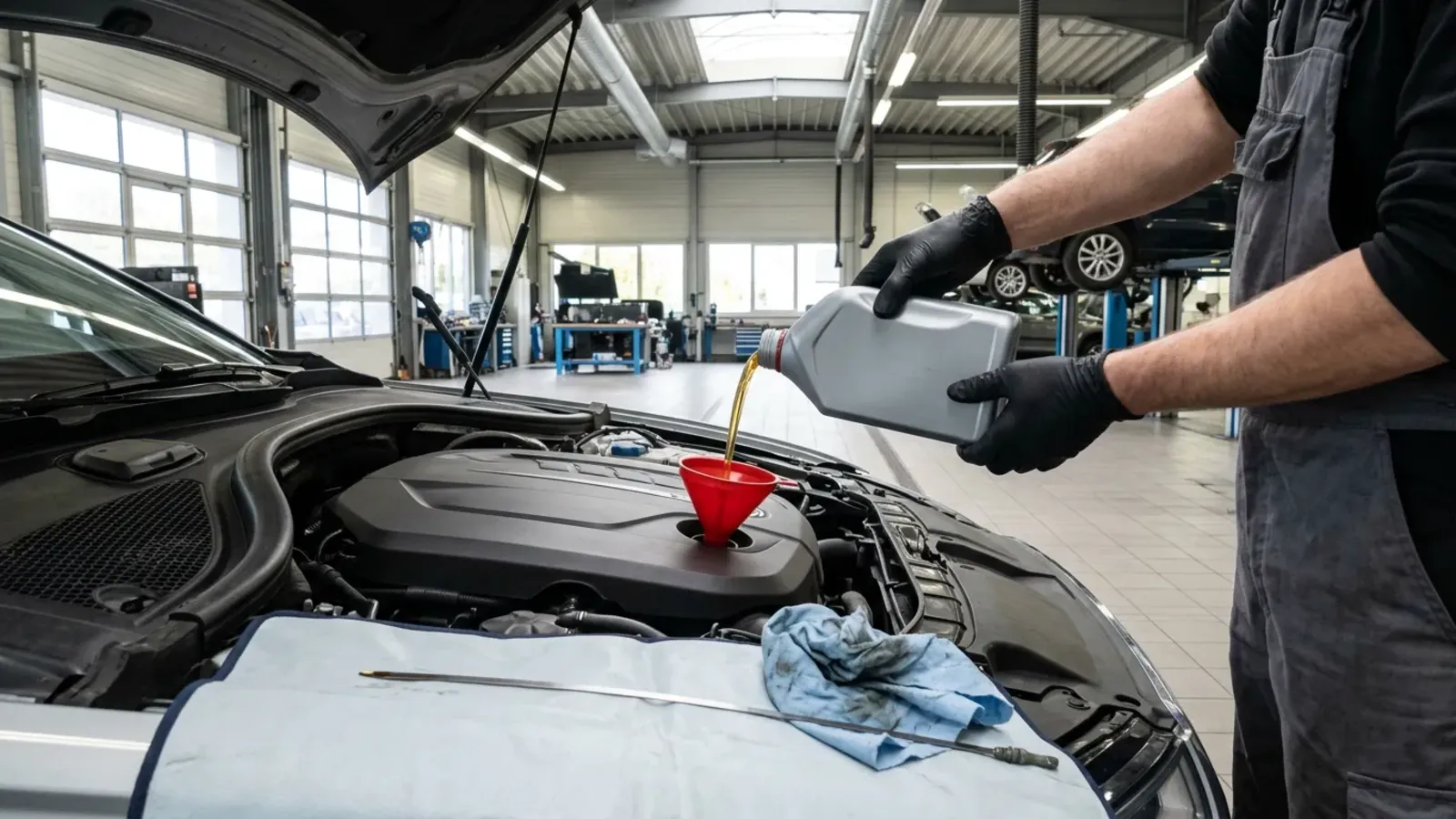
A new or reconditioned turbocharger is only half the repair. Manufacturers and parts suppliers agree here: MAHLE and Delphi recommend changing the oil and filter to the correct ones for the engine, flushing the lubrication system or cleaning the oil sump, checking or replacing the oil feed and return pipes, a new air filter, and cleaning or replacing the intercooler if oil has collected in it. MAHLE adds that the air flow meter should be checked after a turbo replacement, and that a hot engine should be left idling for at least a minute before switching off.
At Serwis Osowa, ul. Odyseusza 20 in Gdańsk, we start with computer diagnostics and a check of the intake system, and only then decide whether the problem lies in the turbo or around it. We are an authorised service centre for Opel and Peugeot and a Bosch Car Service, and we repair all makes. Call: 58 552 55 25 (Mon–Fri 7:30–17:00, Sat 9:00–14:00). We prepare the quote after diagnosis, and a service advisor confirms the scope of work.
Frequently asked questions
Does turbo whistling always mean it is damaged?
No. A healthy turbocharger can also be heard working, and loud whistling very often comes from a leaking hose, intercooler or seal on an intake or exhaust joint. What should worry you is a change in sound compared with what you are used to, and rubbing or rattling noises.
How can you tell the turbo is using oil?
Typical signs are blue or grey smoke when accelerating, oil going down without a leak, and oil in the intake hoses or intercooler. Oil in the intake can, however, also come from a faulty crankcase breather or too high an oil level, so diagnostics decide the cause.
Does the oil need changing after a turbo replacement?
Yes. Turbocharger and parts manufacturers recommend new oil and a new oil filter to the engine's specification when replacing a turbo, and often also cleaning the lubrication system and oil pipes. Old, contaminated oil can quickly damage a new turbo.
How should you look after a turbocharger so it lasts longer?
Change the oil and filter at the manufacturer's intervals and use oil of the correct specification, do not put heavy load on a cold engine, avoid long periods of idling, and after hard driving let the engine run for a moment before switching off. Also keep an eye on the oil level: both too low and too high are harmful.
Sources
- Garrett Motion – Why do turbochargers fail? (more than 90% of failures oil-related, fewer than 1% manufacturing defects, symptoms, driving habits)
- MAHLE (Tech Tips) – Turbo failure: causes and repair (symptoms of oil carbon, smoke, oil in the intercooler, steps after replacement)
- MAHLE Workshop Heroes – The trouble with a whistling turbo (causes of whistling: leaks, restrictions, foreign objects)
- MS Motorservice Technipedia – Oil consumption caused by unfavourable operating conditions for turbocharger (labyrinth seal, return pipe, oil level, crankcase breather)
- Delphi Technologies – Turbo failure modes: oil contamination (causes of oil contamination and recommendations when replacing a turbo)