
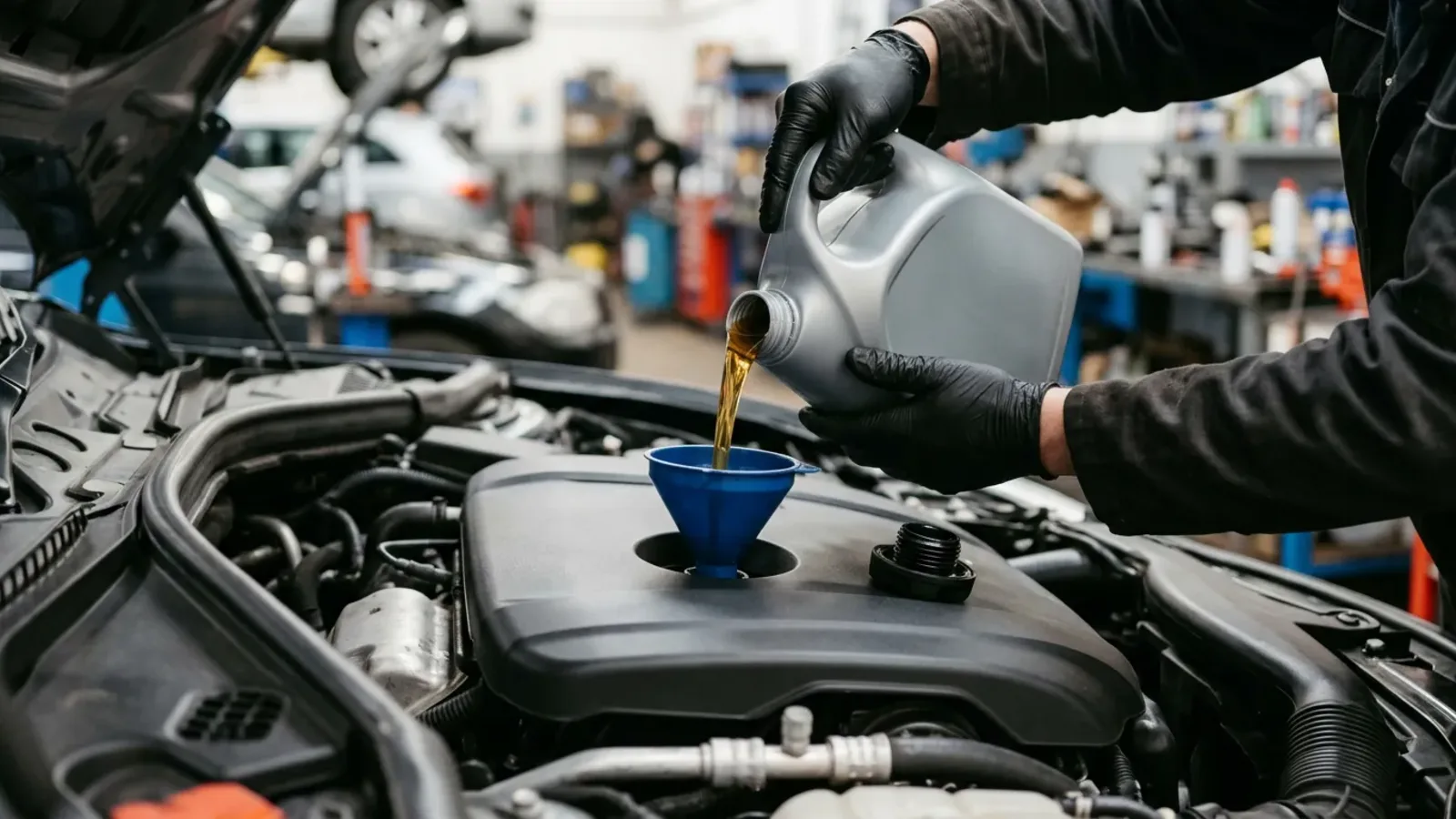
The 1.6 HDi (DV6 family) is a diesel developed by PSA and Ford, fitted since 2002 in Peugeots, Citroëns, Fords (as the 1.6 TDCi), Volvos, Mazdas and Minis. It has a reputation for being economical and durable, but it copes very badly with neglected oil changes: the most common faults are the turbocharger due to poor lubrication, leaking injector seals and, on the 16V version, the chain linking the camshafts. The calmest in use is the simple 90 hp version. Its successor is the 1.6 BlueHDi.
- DV6: 16V from 2002, 8V from 2010
- PSA, Ford, Volvo, Mazda, Mini
- Turbo, injectors, DPF
- Peugeot authorised dealer workshop: campaigns by VIN
Which cars have the 1.6 HDi?
The engine debuted in 2002 in the Citroën Berlingo and quickly reached most PSA models. Ford used it as the 1.6 TDCi, Volvo as the 1.6D, and Mini in the Cooper D and One D versions. This page covers the pre-BlueHDi versions, that is Euro 4 and Euro 5.
| Make | Example models | Notes |
|---|---|---|
| Peugeot | 206, 207, 307, 308 I, 3008 I, 407, Partner | 75–115 hp versions |
| Citroën | C3, C4, Xsara Picasso, C4 Picasso, Berlingo | First used in the Berlingo |
| Ford | Focus II, C-Max, Fiesta (1.6 TDCi) | Ancillary details differ from PSA |
| Volvo | C30, S40/V50, V70, S80 (1.6D) | 109 hp version |
| Mazda, Mini, Suzuki | Mazda 3, Mini Cooper D, SX4 | 90 and 109 hp versions |
How do the 16V and 8V versions differ?
| Version | Years | Design and notes |
|---|---|---|
| 16V, 90 hp (9HX) | from 2002 | Fixed-geometry turbo, single-mass flywheel, usually no DPF – the simplest |
| 16V, 109–110 hp (9HY, 9HZ) | from 2003 | Variable-geometry turbo, dual-mass flywheel, DPF with additive fluid |
| 8V Euro 5 (9HP, 9HR and others) | from 2010 | Intake manifold integrated with the head, timing by belt only |
On the 16V version a toothed belt drives one camshaft, and the other is connected to it by a short chain. This chain can stretch and rub against the head. The 8V version has a simpler timing drive powered solely by the belt.
Typical 1.6 HDi faults and their symptoms
| Problem | Symptom | What we do |
|---|---|---|
| Turbocharger due to poor lubrication (carbon in the oil feed pipe and strainer) | Smoke, oil loss, oil in the intercooler hose | Replace the turbo together with the feed pipe and strainer, check the breather |
| Leaking injector seals | Hissing, smell of exhaust fumes, carbon around the injectors | Replace the seals, clean the seats |
| Injectors | Hard starting, rough running, smoke | Test the injectors; the type (Bosch or Siemens) decides whether they can be reconditioned |
| Chain between the camshafts (16V) | Noise, rough running, loss of power | Check when changing the belt, replace the chain |
| DPF and additive fluid | Limp mode after city driving, fluid message | Read the control unit, top up the fluid, assess the filter |
| Dual-mass flywheel, EGR, crankshaft pulley damper | Knocking, jerking, loss of power | Diagnose and replace worn components |
Replacing only the turbocharger without the oil feed pipe and strainer usually ends in another failure. With the turbo we always check the cause, not just the effect.
How to service the 1.6 HDi to avoid faults?
Auto Świat recommends changing the oil more often than the manufacturer's old plans provided for, no less often than every 15,000 km. The oil specification depends on the version and whether the car has a DPF – we check it by VIN.
- oil of the correct specification at a shortened interval, especially with city driving;
- turbo feed pipe and strainer checked from time to time, and replaced at every turbo repair;
- timing belt with rollers and pump per the plan; on the 16V, a chain check at the same time;
- DPF: topping up the additive fluid and replacing the filter per the plan;
- injector seals inspected at every service.
What do we check on the 1.6 HDi before you buy a car?
- Engine code and version: 90 hp without DPF or 110 hp with DPF and dual-mass flywheel.
- History of oil and timing belt changes.
- Turbo: play, oil in the intake, smoke when accelerating.
- Injectors: carbon around the seats, dose corrections in the control unit.
- Clutch and dual-mass flywheel, DPF condition and additive fluid level.
We are a Peugeot authorised dealer workshop, so by VIN we check service campaigns and car history in the manufacturer's system. Citroëns, Fords, Volvos and Minis with this engine we repair as an all-makes workshop and Bosch Car Service.
Frequently asked questions
Is the 1.6 HDi a good engine?
Yes, if it has been serviced regularly. It is economical and durable, but needs frequent oil changes. The least troublesome is the 90 hp version without DPF and dual-mass flywheel.
Why does the turbo fail on the 1.6 HDi?
Most often due to poor lubrication: carbon blocks the feed pipe and oil strainer. That is why these parts are replaced together with the turbo.
Does the 1.6 HDi have a timing belt or chain?
The main drive is a toothed belt. On the 16V version an additional short chain links the two camshafts. The 8V version has only a belt.
How does the 1.6 HDi differ from the 1.6 BlueHDi?
BlueHDi is the later Euro 6 version with an SCR system and AdBlue fluid. We describe it on a separate page.