The DPF warning light means that the diesel particulate filter is heavily loaded with soot and the control unit has not managed to burn it off by itself. Usually a dozen or so minutes of smooth driving outside town at a steady, higher speed, in line with your car's manual, is enough for regeneration to finish and the light to go out. If the light flashes, does not go out after such a drive or the car goes into limp mode, go to a workshop.
What does the DPF warning light mean?
The DPF warning light is usually a yellow or orange rectangle with dots inside, sometimes with a message on the display, for example "Particulate filter full". In Peugeots and Citroëns the filter is sometimes labelled FAP. The control unit turns it on when, by its calculations, the amount of soot in the filter has exceeded a threshold and self-regeneration could not be completed.
- The light is steady – the filter is full and needs regeneration. Most often you can finish it by driving.
- The light flashes or is on together with the engine light – in many cars this signals that the filter is critically full or regeneration is impossible. A service visit is needed.
- The car loses power and does not rev up – the control unit has gone into limp mode to protect the engine and turbocharger.
Details differ between makes, so when the light first comes on, look in the manual. You will also find there the recommended driving conditions for your model.
How does the DPF and filter burn-off (regeneration) work?
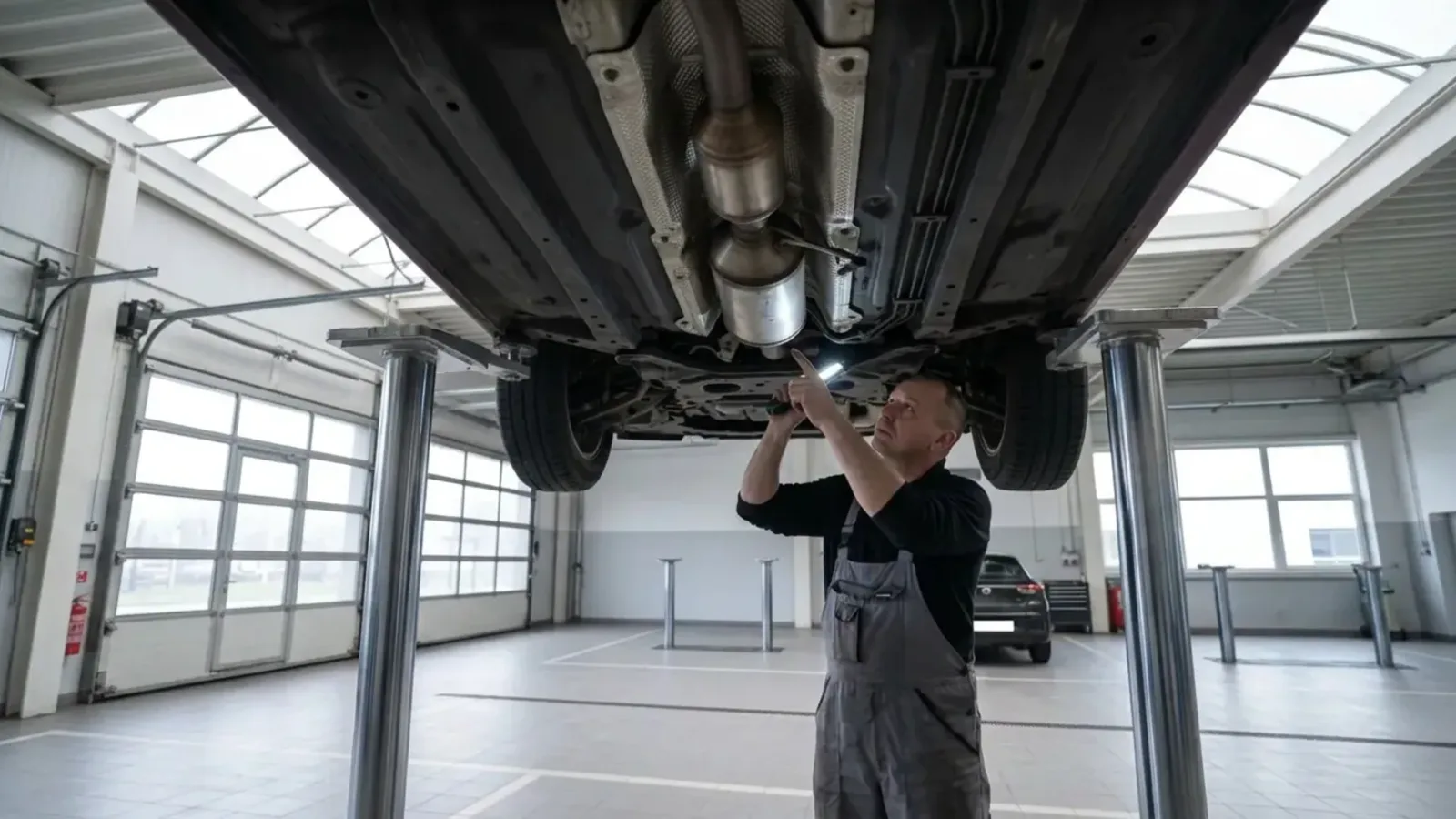
A diesel particulate filter is a ceramic honeycomb element in the exhaust system. Exhaust gases pass through porous walls, and soot stays in the channels. To keep the filter from clogging, the soot has to be burned off at high temperature from time to time. This process is regeneration, colloquially "DPF burn-off".
| Type | When it happens | What the driver does |
|---|---|---|
| Passive | By itself, when the exhaust stays hot for a long time, for example when driving on an expressway | Nothing, it is not visible on the dashboard |
| Active | When the control unit judges that the filter is filling up. An extra dose of fuel raises the exhaust temperature | Do not interrupt the journey if possible. It usually lasts from a few to a dozen or so minutes |
| Forced (workshop) | When active regeneration has failed several times or the DPF light is on with a fault | Carried out by the workshop with a diagnostic tester, under supervision |
Some cars, mainly Peugeot and Citroën and certain models of other makes, have a system with a fluid added to the fuel from a separate tank. It lowers the soot combustion temperature. When the fluid runs out, the filter clogs faster and the control unit reports a fault.
How do you recognise that burn-off is under way? The British motoring club the AA lists typical symptoms: the radiator fan runs after the engine is switched off, idle revs are higher, start-stop does not switch the engine off, momentary fuel consumption rises, and there is a hot, acrid smell from the exhaust. If you notice this, do not switch off the engine after two minutes outside your house, but if possible finish the journey.
The DPF warning light has come on – what to do?
- Check whether the light is steady or flashing, and whether the engine light or a limp-mode message is on next to it.
- If it is steady and the car drives normally, plan a dozen or so minutes of smooth driving outside town. The AA gives roughly 10 minutes at a speed above about 65 km/h, but the recommendations in your car's manual are binding.
- Drive within the law and conditions. It is enough to keep the engine at moderately higher revs in a lower gear, without juddering and without breaking speed limits.
- Do not stop driving until the light goes out. Repeatedly interrupting regeneration promotes filter clogging.
- Refuel if you are on reserve. With a low fuel level many cars do not start active regeneration.
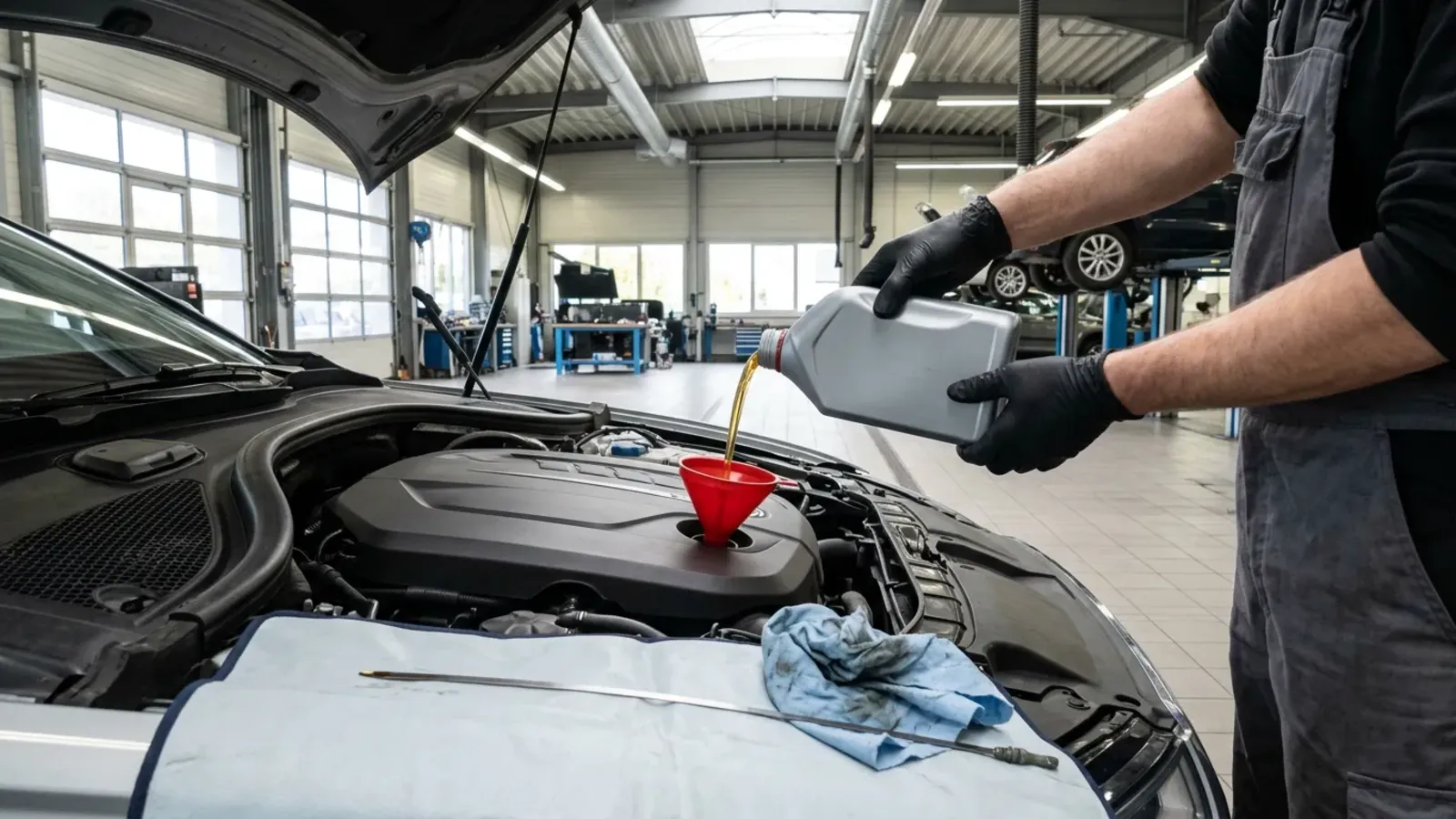
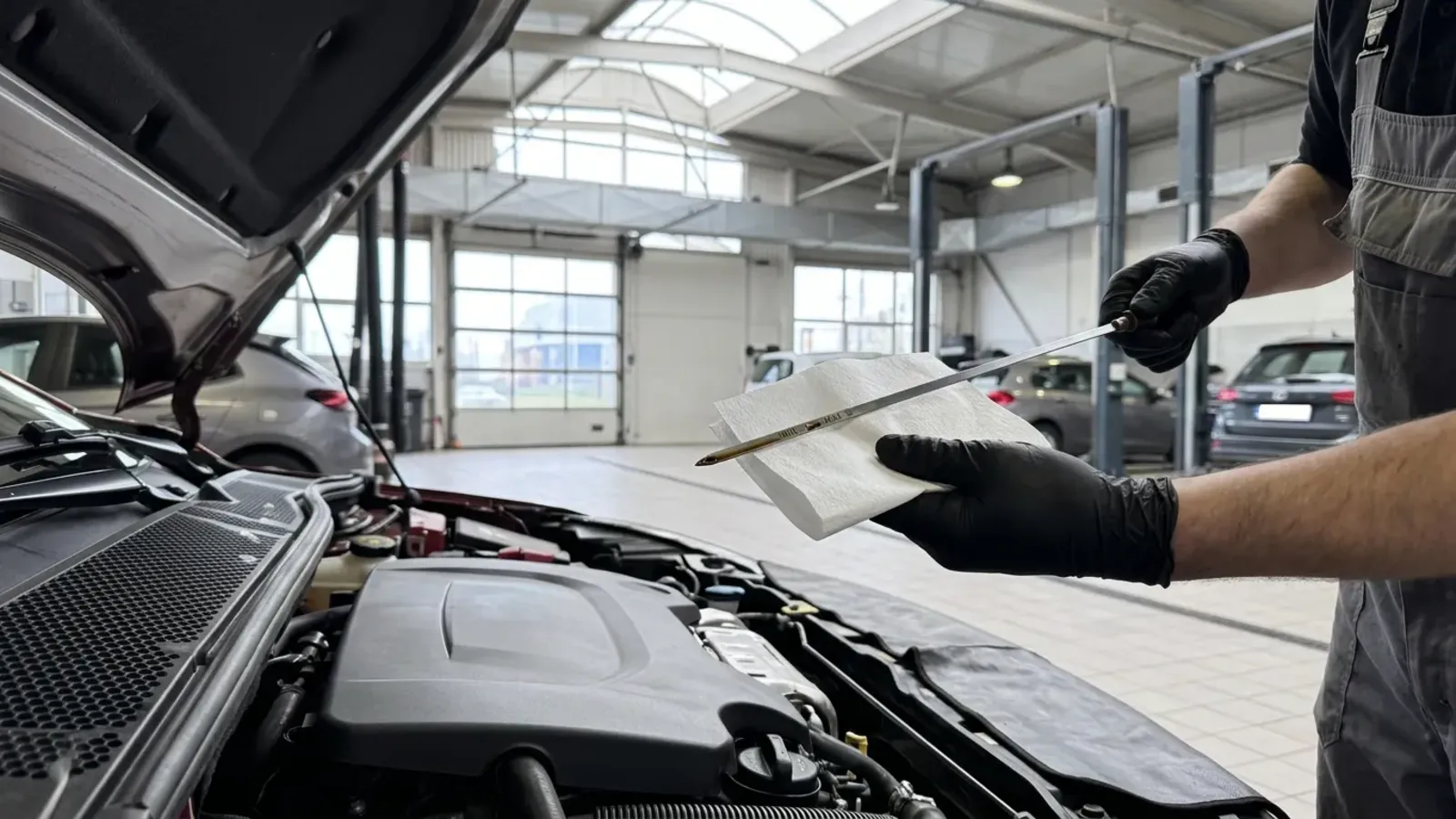
- Afterwards, check the oil level. Frequent failed regenerations can dilute the oil with fuel, and its level then rises.
- If the light does not go out, returns after a few days or flashes – book diagnostics. Do not try to "burn off" the filter while stationary without a tester.
From Osowa you are close to the Tricity Bypass, where it is easier to keep a steady speed than in the traffic jams on Grunwaldzka or Spacerowa. A dozen or so minutes of such driving is usually enough for regeneration to finish.
Why does the DPF clog with town driving?
Burning off soot requires a high exhaust temperature maintained for several to a dozen or so minutes. On short routes the engine barely warms up, and active regeneration is interrupted when you switch off the car outside a shop or school. The soot accumulates and the control unit tries more and more often.
This is a typical scenario in Tricity: commuting from Osowa or Chwaszczyno to work in Wrzeszcz or Oliwa, the school run, shopping, all in traffic jams and a few kilometres at a time. A diesel bought "because it uses little fuel" quickly makes the filter known in this kind of driving. If you drive mainly in town, from time to time do a longer stretch on an expressway and do not ignore the symptoms of regeneration under way.
Other causes of a clogged DPF
Short trips are not everything. If the filter clogs despite regular driving on longer routes, the cause usually sits in the engine or the sensors. Cleaning alone or a new filter without removing that cause quickly ends with the light returning.
| Cause | Symptoms | What to check |
|---|---|---|
| Differential pressure sensor or its hoses | DPF light despite motorway driving, implausible loading readings, limp mode | Sensor values in the tester, hose tightness |
| Leaking or worn injectors | Smoking, uneven running, frequent regenerations | Injection corrections, leak-off |
| Faulty EGR valve or EGR cooler | Loss of power, black smoke, EGR faults | Valve operation, carbon build-up in the intake |
| Worn turbocharger, oil burning | Oil loss, bluish smoke, filter filling quickly with ash | Turbine play, oil consumption |
| Oil of the wrong standard | Faster ash build-up, shorter filter life | Whether the oil has the standard required by the manufacturer (usually low SAPS or mid SAPS) |
| Exhaust temperature sensor | Regeneration does not start or is interrupted | Sensor readings before and after the filter |
| No fuel additive fluid (some PSA cars and other makes) | Additive message, rapid clogging | Level in the additive tank, pump faults |
Oil is particularly often underestimated. Oils with reduced sulphated ash, phosphorus and sulphur content (low SAPS) leave less unburnt ash. Ash, unlike soot, cannot be burned off, so with every thousand kilometres it stays in the filter permanently. That is why, when changing oil, stick to the standard in the manual, not just the viscosity.
DPF cleaning, regeneration or replacement?
The decision is made after diagnostics, not on the basis of the warning light alone. The order is usually as follows:
- Diagnostics: reading faults, differential pressure sensor values, soot and ash level according to the control unit, regeneration history.
- Removing the cause, if there is one (sensor, EGR, injectors, oil).
- Forced regeneration with a tester, when the filter is clogged with soot but sound.
- Cleaning the filter after removal at a specialist firm, when the problem is ash, which regeneration does not remove.
- Replacing the filter, when the element is cracked, partly melted or cleaning does not restore free flow.
Beware of "miracle" fuel additives and flushes. They may help in light cases, but they will not remove ash or repair a damaged sensor. The scope of work and price for your car are always confirmed by the service advisor after diagnostics.
Removing the DPF – why is it a bad idea?
Removing the filter and reprogramming the control unit is sometimes advertised as a "permanent solution". In practice it breaks the rules and creates risk at every inspection and roadside check.
- Technical inspection: the regulation on the scope and manner of carrying out vehicle technical inspections (Dz.U. 2024 poz. 141, annex no. 1 point 8.2.2.1) classifies as a major defect the absence of a factory-fitted exhaust emission reduction device or its clearly incorrect operation. A major defect means a negative inspection result.
- Roadside check: the Road Traffic Act (art. 132 para. 1 point 1 letter c) allows retention of the registration certificate when a vehicle breaches environmental protection requirements, for example exceeds smoke limits.
- Sale and warranty: a car with the filter removed is harder to sell honestly, and interference with the exhaust system and software can void warranty claims in that area.
If the DPF light keeps coming back in your car, come to Serwis Osowa, ul. Odyseusza 20 in Gdańsk. We are an authorised service centre for Opel and Peugeot and a Bosch Car Service, and we repair all makes. Call: 58 552 55 25 (Mon–Fri 7:30–17:00, Sat 9:00–14:00). We will start with computer diagnostics, and the service advisor will confirm the scope of further work.
Frequently asked questions
How long does DPF burn-off take?
Active regeneration usually takes from a few to a dozen or so minutes of smooth driving. The time depends on the model, how full the filter is and the conditions. If you interrupt it by switching off the engine, the control unit will try again at the next opportunity.
How many kilometres between DPF burn-offs?
There is no single value. The control unit starts regeneration according to calculated loading, not a fixed mileage. Sources give roughly a few hundred kilometres between regenerations. If burn-offs happen noticeably more often, it is worth checking the engine and the differential pressure sensor.
Can the DPF be burned off while stationary?
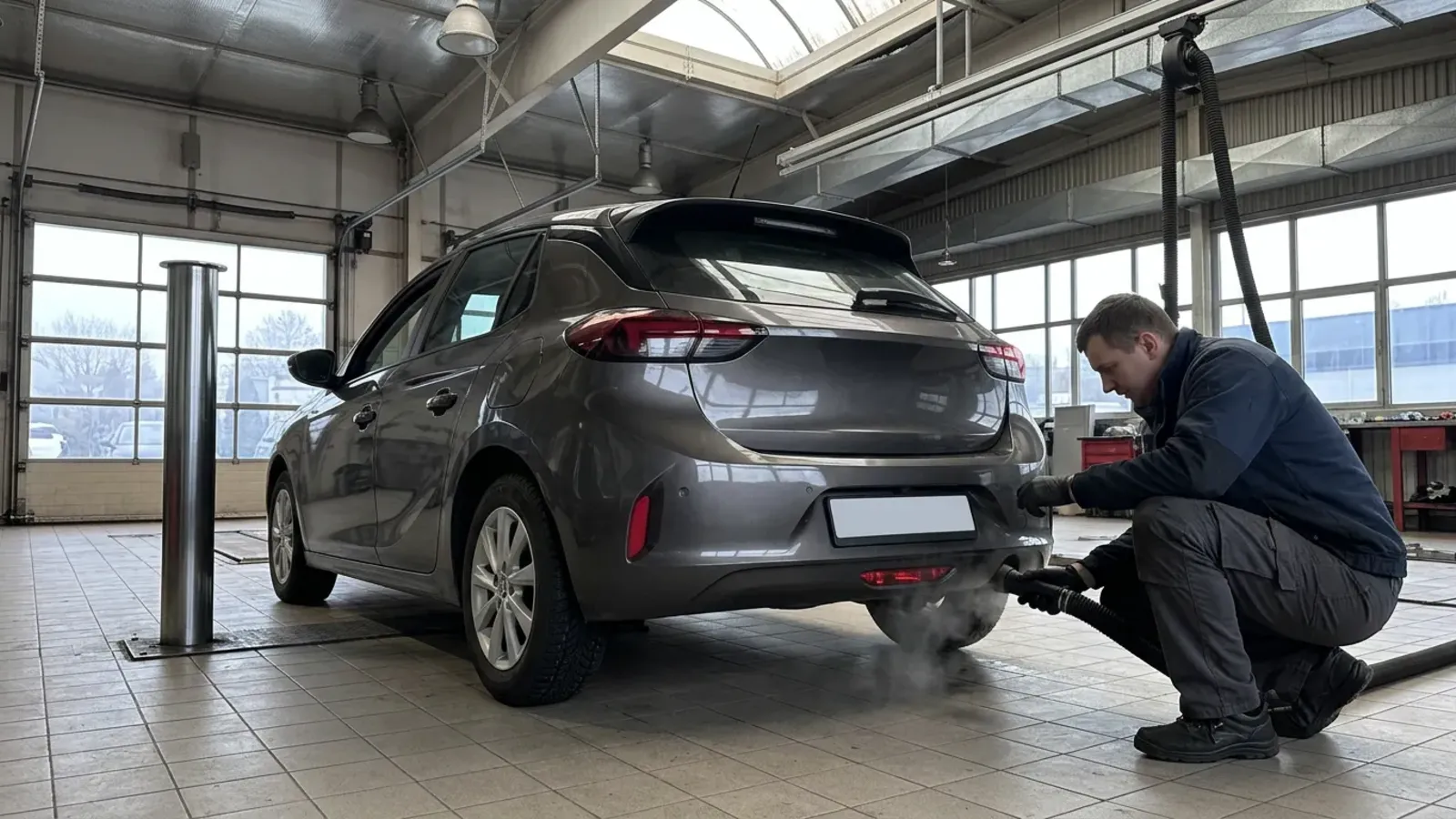
Raising the revs yourself while stationary is no substitute for regeneration. Forced burn-off without driving is carried out with a diagnostic tester in a workshop, with temperature monitoring and in a safe place, because the exhaust system gets very hot.
Can you drive with a clogged DPF?
Briefly and carefully, if the car is not in limp mode. Driving for long with a badly clogged filter increases exhaust back pressure, strains the turbocharger and risks diluting the oil with fuel. When the light flashes or the car loses power, do not delay diagnostics.
Do petrol cars also have a particulate filter?
Yes, many newer direct-injection petrol engines have a GPF (OPF) filter. It works similarly, but petrol engine exhaust is usually hotter, so the filter regenerates more often during normal driving. Short trips do not suit it either.
Sources
- The AA – Diesel particulate filters (active and passive regeneration, symptoms, causes of clogging)
- HELLA Tech World – DPF particulate filter (design, fuel additive systems, regeneration)
- Dz.U. 2024 poz. 141 – consolidated text of the regulation on the scope and manner of carrying out vehicle technical inspections (annex no. 1 point 8.2.2 – exhaust emissions from compression-ignition engines)
- Road Traffic Act, art. 132 – retention of the registration certificate
- TotalEnergies – Modern gasoline engines also need low SAPS oils (sulphated ash and particulate filters)