
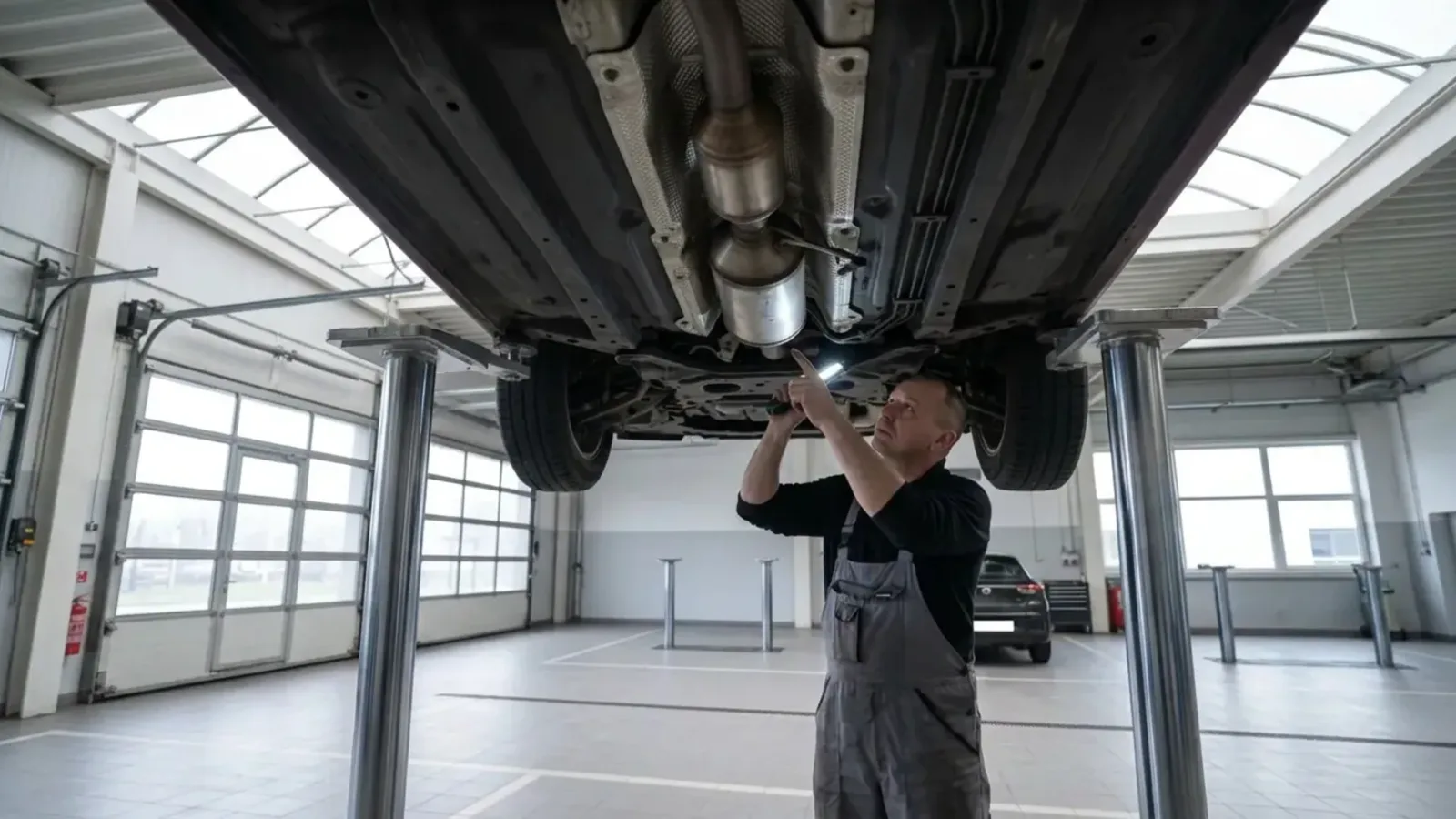
The 1.6 TDI with common rail injection (EA189 from 2009, EA288 from 2012) is rated in reports as a durable engine, without design flaws on the scale of the older VW diesels. Typical trouble is in the ancillaries: the DPF with city driving, the EGR valve, injectors sensitive to fuel quality, and the water pump. Its longevity is decided by runs that allow the DPF to burn off, oil to the VW specification for diesels, and timing replaced together with the water pump.
- DPF, EGR and injection diagnostics
- Timing with the water pump
- Oil to the VW specification for DPF diesels
- Checking the EA189 campaign before purchase
Which cars have the 1.6 TDI engine?
The 1.6 TDI common rail was the Volkswagen Group's basic diesel for over a decade. Power ranges from about 75 to 120 hp, most often 90, 105 and 110 hp. Around 2020 it was replaced by the weaker variants of the 2.0 TDI EA288 evo.
| Make | Example models | Family (approximate) |
|---|---|---|
| Volkswagen | Golf VI and VII, Polo, Passat B7 and B8, Caddy, Touran, Jetta | EA189 about 2009–2013, then EA288 |
| Škoda | Fabia II and III, Octavia II and III, Rapid, Roomster, Yeti | EA189, then EA288 |
| Seat | Ibiza, Leon II and III, Altea, Toledo | EA189, then EA288 |
| Audi | A1, A3 8P and 8V | EA189, then EA288 |
EA189 or EA288: how do the 1.6 TDI generations differ?
Both generations have a cast-iron block, a 16-valve head, common rail injection and a timing belt that also drives the water pump. The EA288 got new ancillaries and an exhaust aftertreatment system, on some versions with an SCR catalyst and AdBlue. The EA189 engines were caught up in the emissions scandal, while the EA288, according to VW's statement, was not.
- As part of the EA189 service campaign, the manufacturer installed new software and, on the 1.6 TDI, also added an element in the intake before the air mass meter (colloquially the "flow straightener").
- The campaign was free of charge. You can check whether a given example has been through it on the brand's website using the chassis number, or at a dealer workshop.
- Auto Świat describes reports of EGR trouble and reduced performance after the campaign in some cars, but this is not the rule.
The most common 1.6 TDI faults and their symptoms
| Fault | Symptom | Cause | What we do |
|---|---|---|---|
| Clogged DPF | DPF light, limp mode, frequent burn-off | Short trips, interrupted regenerations | Reading the fill level, workshop regeneration, finding the cause |
| EGR valve and its cooler | Loss of power, engine light, uneven running | Carbon build-up, wear of the valve's electronics | Diagnostics, cleaning or replacement |
| Piezo injectors | Hard starting, uneven running, loss of power | Sensitivity to fuel quality, mileage | Testing injection corrections and leak-off, regeneration or replacement |
| Leaking water pump | Coolant loss, sometimes already at about 100,000 km | Wear of the pump driven by the timing belt | Replacement together with the timing |
| Turbocharger | Loss of power, whistle, boost pressure fault | Long oil intervals, vane control | Diagnostics of boost and control |
| Dual-mass flywheel | Knocking when switching off, vibration | Wear, more often on the more powerful versions | Assessing vibration, replacement with the clutch |
How to service the 1.6 TDI to avoid failures?
The manufacturer specifies belt replacement as long as every 210,000 km (for example the Golf VI 1.6 TDI), and in severe conditions every 120,000 km. Auto Świat quotes the mechanics' view that it should be done every 120–150,000 km, because the water pump and tensioner often do not survive a long interval. We always replace the timing together with the water pump.
| Area | Recommendation |
|---|---|
| Oil | VW specification for diesels with a DPF (usually 507.00); Auto Świat suggests changing about every 15,000 km instead of LongLife |
| Fuel filter | About every 30,000 km, protects the injectors |
| Timing with water pump | Per VW plan, in practice more often because of the pump |
| DPF | Regular driving on long routes; reacting to the warning light |
Buying a car with the 1.6 TDI? What to watch for
The safest is an example driven on long routes, with invoices for the timing and oil. The most risk comes with a diesel used for years in town, where the DPF rarely finishes burning off. It is also not worth buying a car in which the DPF has been removed; such a car does not meet homologation requirements.
- The engine code and information on whether the EA189 went through the service campaign.
- Reading the DPF fill level and regeneration history.
- Injector corrections and starting on a cold engine.
- Traces of coolant at the water pump, the date of the last timing.
- Vibration when switching off the engine (dual-mass flywheel).
The 1.6 TDI diesel at the workshop in Osowa
We repair the diesels of VW, Škoda, Seat and Audi as a Bosch Car Service, an independent workshop in line with the EU Block Exemption rules (GVO). We start with computer diagnostics and reading the DPF, EGR and injection parameters, because the same symptoms have different causes. We confirm the scope and cost after the diagnosis.
ul. Odyseusza 20, 80-299 Gdańsk Osowa, tel. 58 552 55 25, Mon–Fri 7:30–17:00, Sat 9:00–14:00.
Frequently asked questions
Is the 1.6 TDI a good engine?
According to Auto Świat it is a durable design that, with proper servicing, reaches very high mileages. The weak points are the ancillaries: the DPF, EGR, injectors and water pump, not the engine's mechanics.
Does the 1.6 TDI have a timing chain or belt?
A toothed belt, which also drives the water pump. That is why we always replace the pump when replacing the timing.
Does the EA189 service campaign damage the engine?
The manufacturer stated that it does not affect durability. In some cars, however, EGR trouble and a change in running characteristics were reported. If symptoms appeared after the campaign, we start with diagnostics of the EGR and the air mass meter.
How do I look after the DPF on a 1.6 TDI with city driving?
Every so often drive for several dozen minutes on a route at a steady speed, do not interrupt the burn-off, and use oil to the specification for engines with a DPF. When the warning light comes on, do not wait for limp mode.
Do you remove the DPF or EGR?
No. We diagnose and repair these systems so that the car meets homologation requirements.