Typical symptoms of a problem with an automatic gearbox control unit are limp-home mode with the car stuck in one gear (often 2nd or 3rd), harsh or delayed shifts, a gearbox fault message, flashing P-R-N-D indicators and no reverse. However, the same symptoms are also caused by old or low oil, solenoid valves, wiring and connectors, a weak battery or a software fault. That is why the repair is decided after reading the faults and gearbox parameters, not on symptoms alone.
What does the automatic gearbox control unit (TCU, mechatronic unit) do?
The gearbox control unit, abbreviated TCU (transmission control unit), decides when and how to change gear. Bosch, describing its control units, explains that the TCU processes sensor signals and uses software to turn them into commands for the gearbox actuators – electrohydraulic or electromechanical. The software adapts gear changes to the driving situation, and the control unit also runs diagnostics on the gearbox and its components.
- Inputs: gearbox input and output shaft speed, selector position (P-R-N-D), oil temperature, accelerator pedal position, information from the engine and ABS control units.
- Outputs: shift and pressure control solenoid valves, the torque converter lock-up clutch, and in dual-clutch gearboxes the clutch control.
- Design: the control unit can be a separate module in the body, bolted to the gearbox or integrated with the valve body. That last assembly – electronics together with the valves – is called the mechatronic unit.
In a mechatronic unit the electronics work in oil and at high temperature, and an electronic fault and a hydraulic fault often give the same symptoms. That is why the “control unit”, as drivers usually understand it, generally covers the whole mechatronic unit, and in workshop practice you have to establish whether the electronics, the valves or a completely different component is to blame.
What are the symptoms of a faulty automatic gearbox control unit?
- Limp-home mode: the gearbox stops changing gear and stays in one ratio, most often 2nd or 3rd, and the car accelerates poorly. After switching the engine off and restarting, the symptom may disappear for a while.
- Harsh, abrupt or delayed gear changes, a “thump” when selecting D or R.
- A gearbox fault message, gearbox warning light or engine warning light on the dashboard.
- Flashing or unlit P-R-N-D indicators on the display, an incorrect gear indicator.
- No reverse, or no drive after selecting D.
- Problems starting the engine when the control unit does not recognise the P or N position.
- Symptoms that appear only with a warm gearbox or only in damp conditions – a common sign of an electrical problem.
Limp-home mode is a safeguard, not a death sentence for the gearbox. The control unit deliberately restricts its operation to avoid further damage. Driving gently to a workshop is usually possible, but driving for long in this mode, especially on longer routes, is not a good idea.
If the car loses drive completely while moving, or no gear can be selected, do not try to carry on. Stop in a safe place.
Which fault codes point to the automatic gearbox?
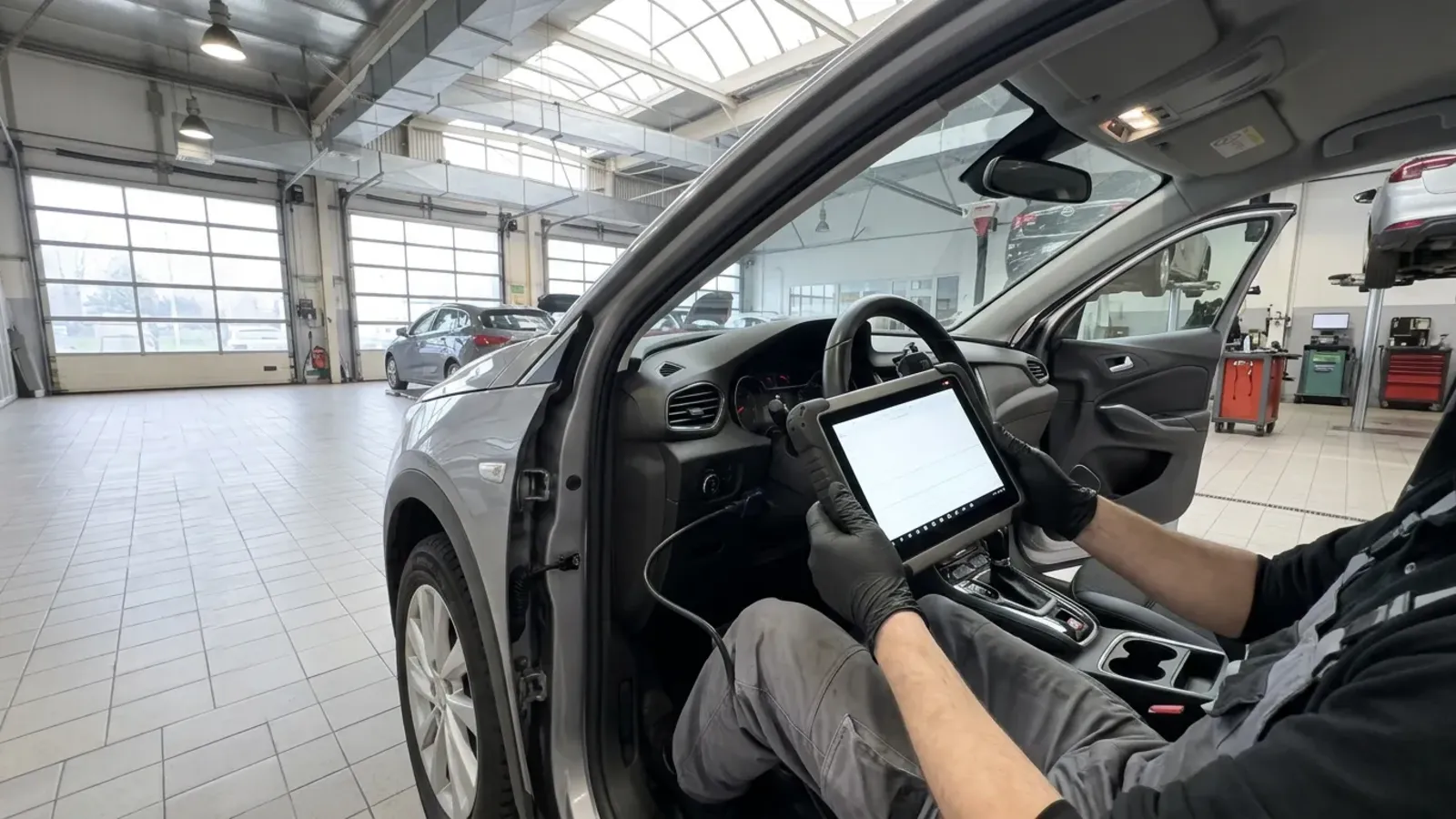
In the OBD II standard, codes in the P0700–P0799 range relate to the gearbox. These are general (generic) codes, and manufacturers also use their own, more detailed codes stored in the gearbox control unit. Code P0700 on its own only says that the gearbox control unit has reported a fault – the details have to be read directly from the TCU with a tester that supports the gearbox, because a simple OBD interface often sees only the engine control unit.
| Code | General meaning | What is usually checked |
|---|---|---|
| P0700 | Transmission control system fault (warning light request) | Codes stored in the gearbox control unit itself |
| P0705 | Transmission range sensor circuit fault (PRNDL) | Range sensor/switch, wiring, adjustment |
| P0710 | Transmission fluid temperature sensor circuit fault | Sensor, connector, internal wiring harness |
| P0715 | Input/turbine speed sensor circuit | Speed sensor, wiring |
| P0720 | Output speed sensor circuit | Speed sensor, wiring |
| P0730 | Incorrect gear ratio | Oil level and condition, pressure, clutch wear |
| P0740 | Torque converter clutch circuit | Solenoid valve, wiring, oil |
| P0750, P0760 | Shift solenoid “A”, “C” | Solenoid valve, its circuit, power supply |
A code points to the area of the fault, not to a part to replace. A solenoid valve fault can result from corrosion on a connector, a damaged harness or the electronics that control the valve.
What else gives the same symptoms as a faulty gearbox control unit?
| Cause | How it shows | How it is checked |
|---|---|---|
| Low or old oil | Jerking, slipping, delayed engagement, overheating | Level check at temperature, oil assessment |
| Solenoid valves, valve body | Harsh shifts on specific gears, solenoid codes | Codes, live data, actuator tests |
| Wiring, connectors, moisture | Intermittent symptoms depending on temperature or weather | Inspection of connectors, circuit measurements |
| Weak battery, poor earths | Many faults at once after starting, limp-home mode | Voltage measurement, battery and charging test |
| Software | Harsh shifts with no mechanical fault, known issues on the model | Checking the version and manufacturer updates |
| Speed sensors, selector position sensor | Wrong gear indicator, no gear changes | Sensor codes, signal comparison |
The battery is particularly often underestimated. Control units do not cope well with voltage drops during cranking, and a weak battery can leave several random codes in the memory of different modules at once, including the gearbox. Before an expensive component is suspected, it is worth checking the power supply.
What do gearbox control unit diagnosis and repair involve?
- Interview and test drive: in which gear and under what conditions the symptom appears, with a cold or warm gearbox.
- Reading codes from the gearbox control unit and other modules, recording the conditions when the fault occurred (freeze frame data).
- Live data: oil temperature, shaft speeds, solenoid currents, clutch adaptation values.
- Checking battery voltage, earths and gearbox connectors.
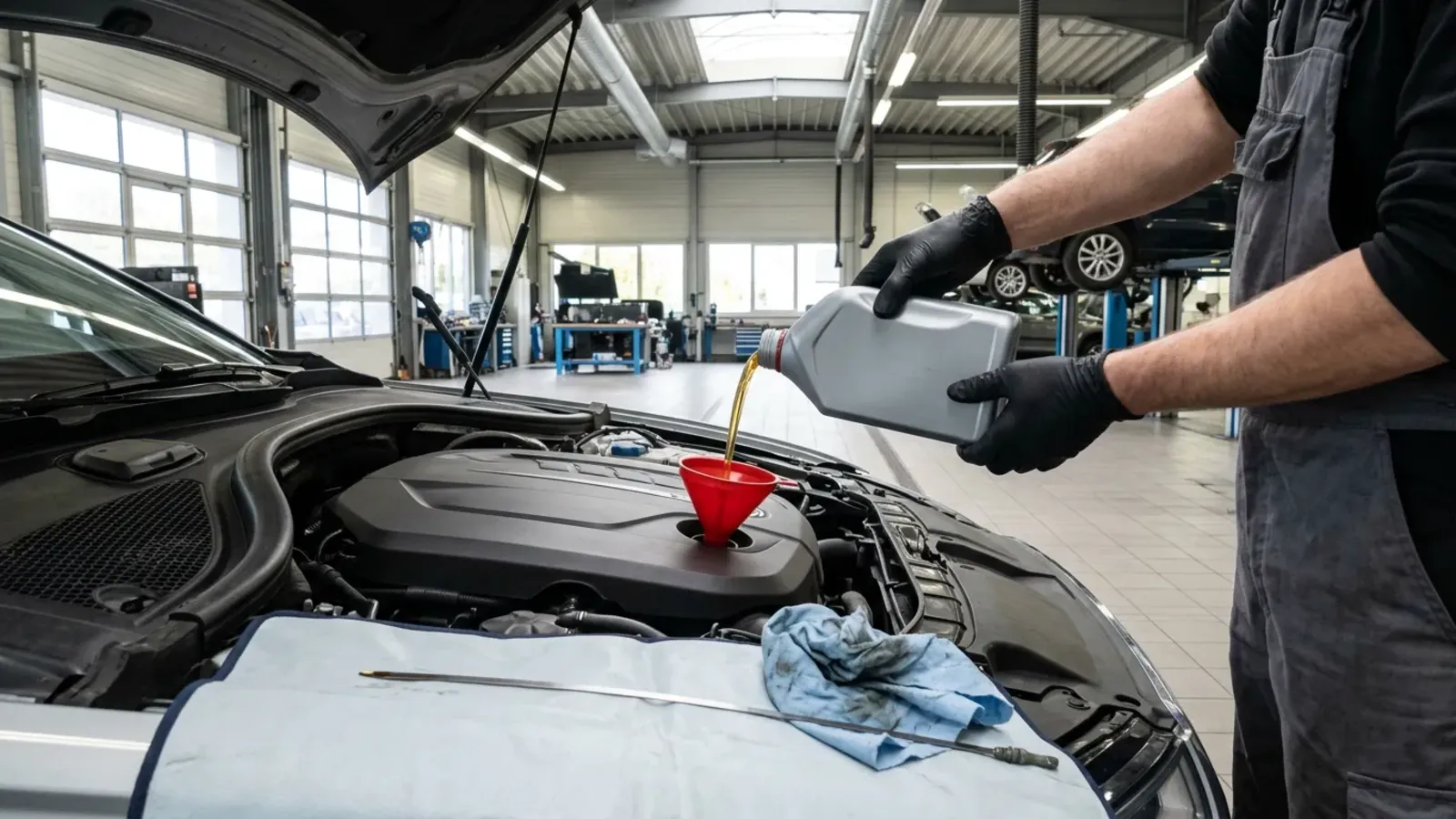
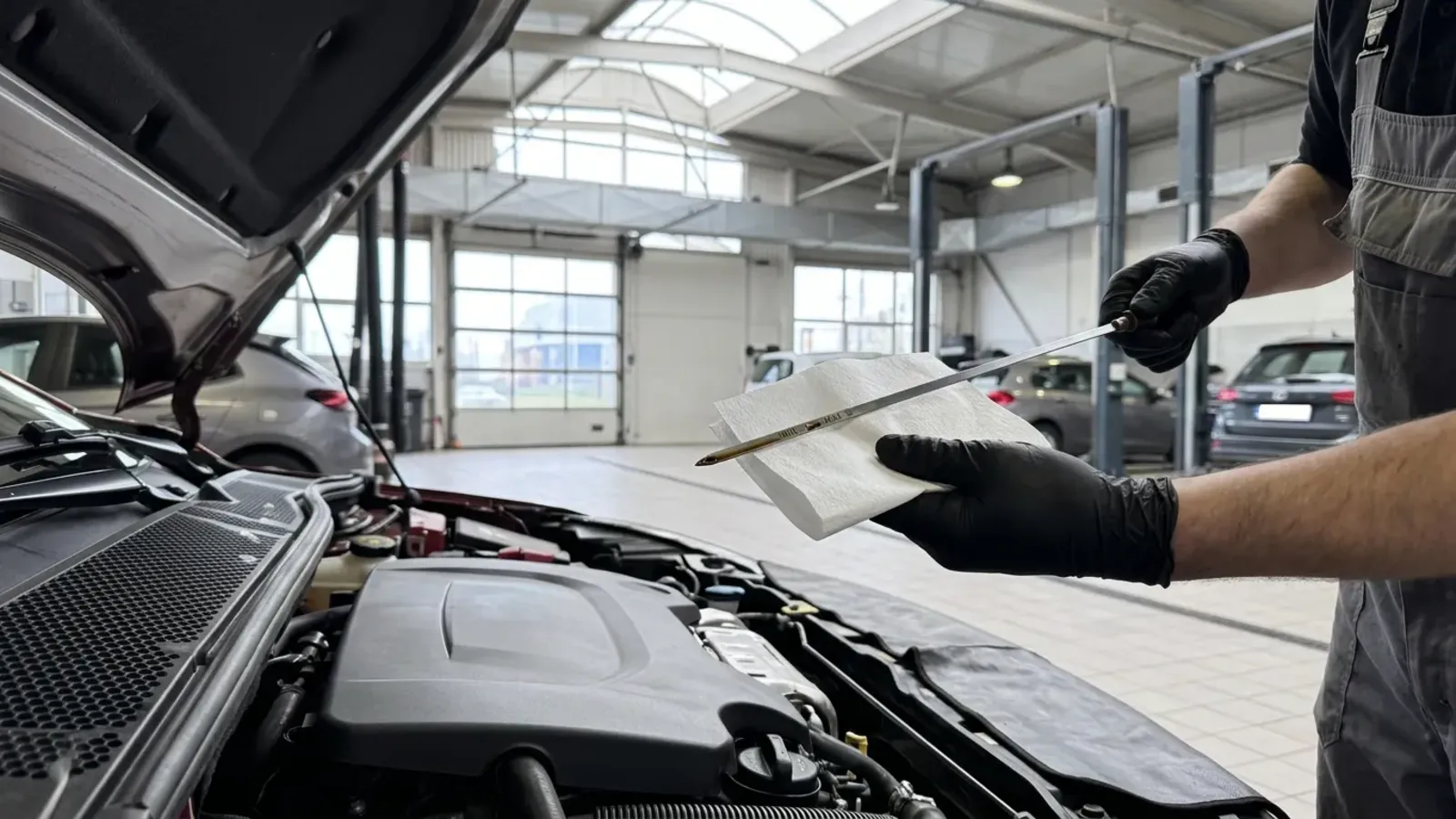
- Checking the oil level and condition according to the manufacturer’s procedure.
- Only then choosing the repair.
| Solution | When it makes sense |
|---|---|
| Software update | The manufacturer has released a newer version for the given problem |
| Reset and new adaptation | Harsh shifts after an oil change, repair or battery disconnection |
| Connector or harness repair | Circuit faults, corrosion, damaged wiring |
| Solenoid valve or valve body replacement | Confirmed hydraulic fault with working electronics |
| Mechatronic unit repair or replacement with coding | Damaged electronics or the whole assembly; a new control unit usually has to be coded and adapted to the car |
Replacing the control unit “to see if it helps”, e.g. with a used one from another car, often does not work without coding and adaptation, and it may not remove the real cause if the problem lies in the oil or the hydraulics.
DSG mechatronic unit: known issues and where to repair it in Gdańsk?
In dual-clutch gearboxes the mechatronic unit controls both the clutches and gear selection. A well-known example is the Volkswagen service campaign for the 7-speed DQ200 gearbox: according to a notice from Volkswagen New Zealand, in some mechatronic units from cars built from October 2008 to November 2014 the pressure accumulator could crack, leading to loss of oil pressure and interruption of drive. The campaign repair included an inspection, replacement of hydraulic components and a software update. It did not affect every vehicle – the status of a specific car is checked by VIN with the manufacturer.
When buying a used car with a DSG, it is therefore worth checking whether gearbox recalls/service campaigns have been carried out, and reading the gearbox control unit faults before purchase.
You can have your automatic gearbox and its controls diagnosed at Serwis Osowa, ul. Odyseusza 20 in Gdańsk. We are an authorised Opel and Peugeot service centre and a Bosch Car Service, and we repair gearboxes of all makes, including in cars from the USA. The scope of the repair – from updates and adaptation to mechatronic components – is confirmed by a service advisor after diagnosis, and the quote is given before work starts. Call: 58 552 55 25 (Mon–Fri 7:30–17:00, Sat 9:00–14:00).
Frequently asked questions
Can you drive with a faulty gearbox control unit?
In limp-home mode you can usually drive gently to a workshop, but it is not worth driving like that every day or on longer routes. If the car loses drive or no gear can be selected, stop driving.
Does disconnecting the battery reset the gearbox control unit?
It can erase some data or make the symptom disappear for a while, but it does not fix the cause. In some cars the gearbox needs a new adaptation after the power is disconnected, so it may work worse until it “relearns”.
How can you tell a control unit fault from mechanical gearbox damage?
It cannot be reliably decided from symptoms. The answer comes from the gearbox control unit codes, live data, actuator tests and the oil condition – metal particles and a burnt smell point rather to mechanical damage.
Does a new or used gearbox control unit need coding?
Usually yes. The control unit must have the correct software for the car, and an adaptation is carried out after fitting. Without this, faults or harsh gear changes can appear.
Sources
- Bosch Mobility – Transmission control unit, product data sheet (tasks of the gearbox control unit, diagnostics, integrated versions)
- AA1Car – Generic OBD II diagnostic trouble codes P0700–P0799
- Volkswagen New Zealand – Mechatronics Unit (campaign 35E5, DQ200 gearbox)
- ZF Aftermarket – Automatic Transmissions: oil change (oil level at temperature, signs of gearbox damage in the oil)